Language
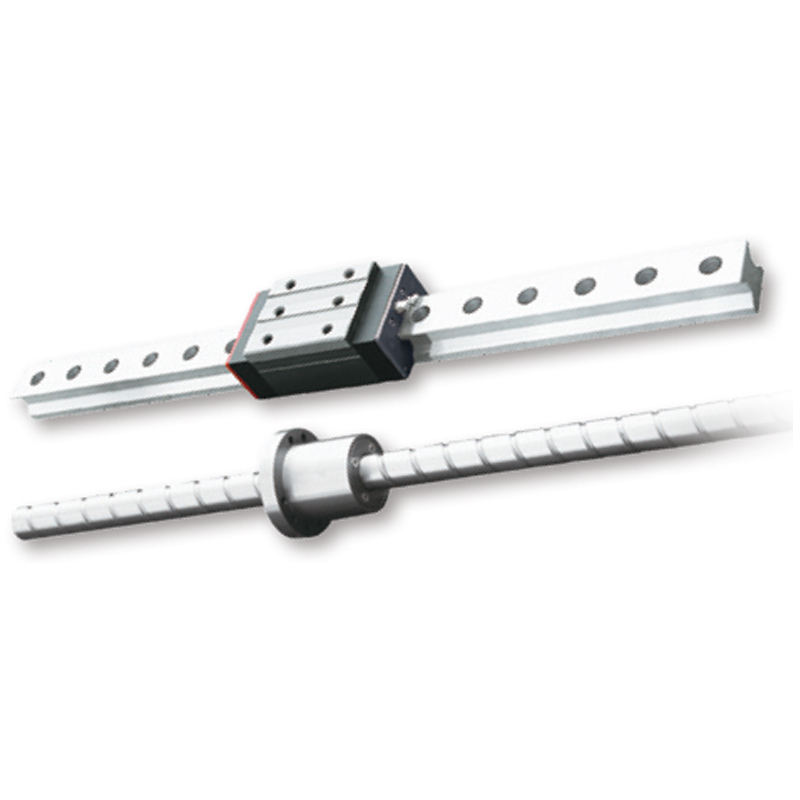
A ball screw is a mechanical linear actuator that translates rotational motion to linear motion with little friction. It consists of a screw shaft and a nut, each with matching helical grooves, and ball bearings that roll between these grooves. This design offers high efficiency, precision, and load capacity, making it ideal for applications in industries such as aerospace, automotive, robotics, and manufacturing machinery.
Below are the detailed specifications for our standard ball screw series. These parameters ensure optimal performance and reliability in various operating conditions.
| Parameter | Range | Description |
|---|---|---|
| Diameter (mm) | 6 - 80 | Determines the size and load-handling capability. |
| Lead (mm) | 2 - 50 | Affects linear travel per revolution; smaller lead for higher precision. |
| Accuracy Grade | C1 - C10 | Higher grades (e.g., C1) offer tighter tolerances for precision applications. |
| Dynamic Load (N) | 500 - 150,000 | Maximum load the screw can handle while in motion. |
| Static Load (N) | 800 - 250,000 | Maximum load at rest without permanent deformation. |
| Material | SUJ2 Steel / Stainless | Choice based on strength, wear resistance, and environmental factors. |
| Surface Treatment | Black Oxide, Chrome, Nickel | Enhances corrosion resistance and extends service life. |
Our ball screws are engineered for superior performance, offering benefits such as high efficiency (up to 90%), minimal backlash, long service life, and quiet operation. They are customizable to meet specific application needs, including special lengths, pre-load adjustments, and integration with various drive systems.
Here are some frequently asked questions about ball screws, answered in detail to help you make informed decisions.
What is the typical lifespan of a ball screw?
The lifespan depends on factors like load, speed, lubrication, and accuracy grade. Under normal conditions with proper maintenance, our ball screws can last over 10,000 hours of operation. Regular inspection and lubrication are key to maximizing life.
How do I select the right ball screw for my application?
Consider parameters such as load capacity, speed requirements, accuracy needs, and environmental conditions. Our diameter and lead options allow customization; consult our technical team for specific recommendations based on your machine's specifications.
Can ball screws be used in high-temperature environments?
Yes, our ball screws are rated for temperatures up to 120°C. For higher temperatures, special materials and lubricants can be used; we offer custom solutions for extreme conditions.
What maintenance is required for ball screws?
Regular lubrication is essential to reduce wear and prevent failure. We recommend greasing every 500-1000 hours of operation, depending on usage. Inspect for signs of wear, such as noise or increased backlash, and replace components as needed.
Are ball screws reversible?
Yes, ball screws can convert linear motion to rotational motion and vice versa, making them suitable for bidirectional applications. However, efficiency might vary slightly based on design and pre-load.
How does accuracy grade affect performance?
Higher accuracy grades (e.g., C1) provide tighter tolerances, reducing positional error. This is critical in precision machinery like CNC machines or medical devices, where even minor deviations can impact performance.
What is the difference between rolled and ground ball screws?
Rolled ball screws are cost-effective and suitable for general applications, while ground ball screws offer higher precision and are used in critical, high-accuracy systems. Our product line includes both types to match different needs.
Can I get custom-length ball screws?
Absolutely. We offer custom manufacturing for lengths beyond standard sizes, ensuring perfect fit for your machinery. Lead times may vary based on specifications.
How do I troubleshoot common issues like noise or vibration?
Noise or vibration often indicates misalignment, lack of lubrication, or wear. Check for proper installation, ensure adequate lubrication, and inspect for damage. Our support team can provide diagnostic assistance.
Are there alternatives to ball screws for linear motion?
Yes, alternatives include lead screws or linear motors, but ball screws are preferred for their high efficiency, precision, and load capacity. They are ideal for applications requiring smooth motion and long life.