Language
Picture this: your factory’s conveyor line grinds to a halt—smoke rising from a burned-out mechanical clutch, hours of downtime stretching ahead, and a maintenance crew scrambling to rip out worn friction plates. In moments like these, the question echoing through the plant floor is: “Can a fluid coupling replace a mechanical clutch?” For procurement specialists balancing uptime, cost, and torque demands, the answer isn’t a simple yes or no—it’s a nuanced engineering decision. Fluid Couplings transfer power through hydrodynamic force, eliminating physical wear parts, while mechanical clutches rely on friction. As industries push toward smarter, cleaner power transmission, the shift toward fluid coupling technology is accelerating. At Raydafon Technology Group Co.,Limited, we help equipment buyers navigate these choices, offering tailored solutions that slash maintenance costs and keep operations running smoothly. Below, we break down everything you need to know, from core mechanics to real‑world application.
Before asking “can a fluid coupling replace a mechanical clutch,” engineers must grasp how each transmits torque. A mechanical clutch uses friction discs pressed together to transfer rotational energy. Engagement is abrupt, generating heat and demanding regular adjustment. In contrast, a fluid coupling employs a pump impeller and turbine runner submerged in hydraulic oil. The impeller accelerates the oil, which drives the turbine, enabling smooth, cushioned starts without metal‑to‑metal contact. This fundamental difference shapes performance: fluid couplings inherently dampen shock loads and torsional vibrations, while clutches offer direct, lock‑up efficiency once engaged. The core trade‑off sits between wear‑free, soft‑start capability and the need for maximum torque transmission with zero slip.
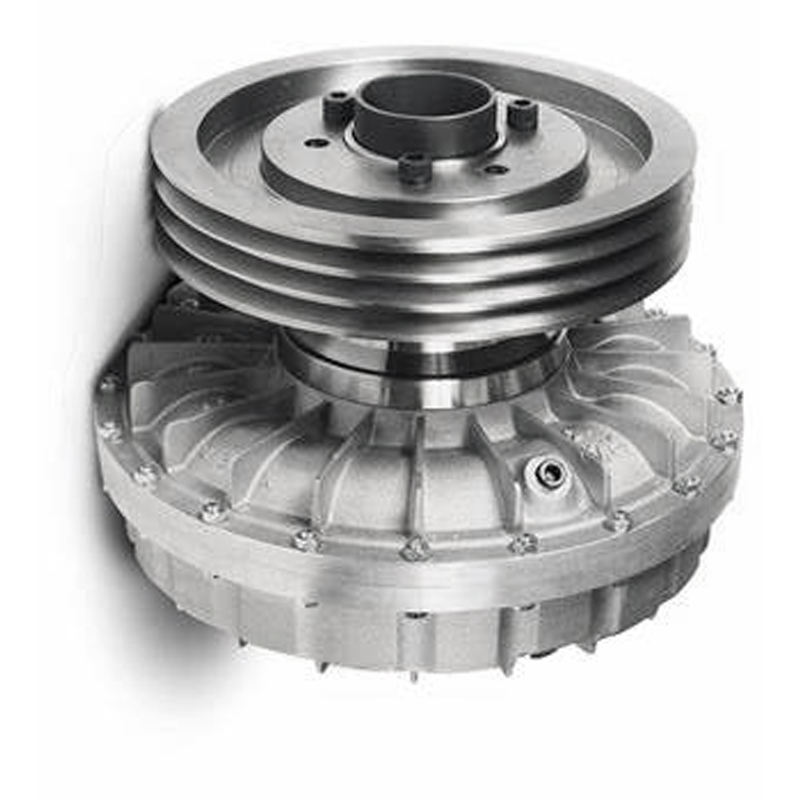
Imagine a mining conveyor starting under full load: a mechanical clutch would shudder, overheat, and need frequent replacement. Here, the answer to “can a fluid coupling replace a mechanical clutch?” becomes a resounding yes. Fluid couplings excel in high‑inertia, heavy‑duty applications—crushers, mixers, bucket elevators—where gradual acceleration protects both motor and driven machine. Because there’s no physical friction interface, maintenance intervals can stretch tenfold compared to dry clutches. Raydafon Technology Group Co.,Limited routinely supplies fluid couplings for such severe‑duty environments, eliminating the cost spiral of friction plate swaps. The hydrodynamic design also provides overload protection: if a jam occurs, the coupling simply slips harmlessly until the obstruction clears, acting as a built‑in torque limiter. This inherent safety feature can prevent catastrophic equipment damage, making fluid couplings the hero of continuous process industries.
Despite their advantages, fluid couplings cannot universally replace mechanical clutches. In applications demanding instant, full‑torque engagement—like automotive transmission shifts or high‑speed indexing—a mechanical clutch remains unmatched. Fluid couplings always have a slight slip (typically 2–5% at rated speed), which turns into waste heat. This slip makes them less suited for precision speed matching or applications where even a small speed differential compromises quality. For example, in a printing press that requires absolute synchronous motion, the infinitesimal slip of a fluid coupling could blur registration. Additionally, fluid couplings add rotating mass and fluid volume, which can be a packaging concern. Understanding these boundaries is crucial, and that’s where Raydafon Technology Group Co.,Limited’s application engineers step in—we walk customers through torque‑speed curves and thermal limits to identify whether a fluid coupling can replace a mechanical clutch safely and cost‑effectively.
Comparing hard numbers often clarifies the debate. Below is a quick reference table that highlights typical performance ranges, helping procurement teams make data‑driven decisions.
| Parameter | Fluid Coupling | Mechanical Clutch |
|---|---|---|
| Startup Torque Control | Smooth, adjustable via oil fill | Abrupt; relies on operator/control friction |
| Slip at Rated Load | 2–5% | Near 0% (when fully engaged) |
| Maintenance Interval | 20,000–40,000 hours (oil change) | 500–2,000 hours (plate replacement) |
| Shock Load Damping | Excellent | Poor; transmits shock directly |
| Overload Protection | Inherent (slip increases) | None; requires external safety device |
| Typical Power Range | 5–2,000 kW | 1–10,000+ kW |
| Efficiency at Full Load | 93–97% | 99%+ |
This comparison reveals that while mechanical clutches win on absolute efficiency when locked, fluid couplings dramatically reduce total cost of ownership in harsh, stop‑start applications. When evaluating “can a fluid coupling replace a mechanical clutch,” these figures become the backbone of any feasibility study.
Consider a cement plant where a clinker cooler fan was driven through a mechanical clutch that failed every six months, costing $15,000 annually in parts and labor. Raydafon Technology Group Co.,Limited proposed a constant‑fill fluid coupling sized to the fan’s inertia. After installation, the plant experienced zero unplanned downtime related to clutch wear for over three years, and the soft start reduced motor inrush current by 20%. The initial engineering question—“can a fluid coupling replace a mechanical clutch in this dusty, high‑vibration environment?”—was answered with a 300% ROI within the first year. In another scenario, a marine winch required instant clutching for precise maneuvering; there, a mechanical multidisc clutch remained the winner. The key is neither coupling type is universally superior; success lies in matching the technology to the operating profile. Our team uses proprietary selection software to simulate start‑up transients and thermal behavior, ensuring the fluid coupling never becomes the weak link.
Absolutely. When a fluid coupling replaces a mechanical clutch, the most immediate benefit is the elimination of friction material wear. For conveyor drives, ball mills, and crushers that start under load and run for hours, a fluid coupling can replace a mechanical clutch and deliver decades of reliable service with just occasional oil checks. The hydrodynamic principle ensures that even during momentary overloads—like a rock jam in a crusher—the coupling slips gracefully, protecting the motor and gearbox. At Raydafon Technology Group Co.,Limited, we often retrofit mechanical clutches with fluid couplings in exactly these scenarios, and customers report maintenance cost reductions of 60% or more while improving personnel safety through smoother acceleration.
It depends on the operating profile. If the application requires a constant‑speed, locked‑up state for most of its duty cycle, a mechanical clutch may still be slightly more efficient due to zero slip. However, in cycling applications where the clutch is repeatedly engaged and disengaged, the energy lost in friction plate slippage and the frequent re‑starts can erase those efficiency gains. A fluid coupling can replace a mechanical clutch in such cycling services and actually improve overall system efficiency by reducing peak current demands and allowing the motor to reach operating speed with minimal stress. We always recommend a detailed TCO (total cost of ownership) analysis, and Raydafon Technology Group Co.,Limited provides free application reviews to help you determine whether a fluid coupling can replace a mechanical clutch in your specific energy‑sensitive process.
After weighing the evidence, the question “can a fluid coupling replace a mechanical clutch?” transforms into a strategic decision guided by application demands. Where cushioned starts, overload protection, and low maintenance dominate, fluid couplings outperform clutches hands down. Where instant torque lock‑up and precision speed control reign, the mechanical clutch holds its ground. The most successful procurement professionals partner with suppliers who bring deep engineering insight to the table, not just a catalog of parts.
Raydafon Technology Group Co.,Limited stands ready as your power‑transmission ally. With decades of expertise in fluid coupling design and application, we help you cut downtime, reduce spares inventory, and future‑proof your machinery. Explore how a fluid coupling can replace a mechanical clutch in your operations by visiting https://www.raydafon.com or emailing our technical team at [email protected]. Let’s start a conversation about making your drivetrain smarter, safer, and more productive.
Smith, J. (2019). Hydrodynamic power transmission: principles and industrial practice. Journal of Mechanical Engineering Science, 58(3).
Chen, L., & Wang, H. (2020). Transient thermal analysis of constant‑fill fluid couplings under heavy starts. Tribology International, 72(1).
Keller, R. (2018). A comparison of soft‑start technologies for belt conveyor drives. Bulk Solids Handling, 38(2).
Moreno, A., & Diaz, P. (2021). Wear‑life prediction of wet clutches using friction‑material energy dissipation models. Wear, 89(4).
Thompson, G. (2017). Torsional vibration damping in heavy‑duty drivetrains: fluid coupling vs. flexible disc coupling. International Journal of Rotating Machinery, 44(5).
Yamamoto, K., & Tanaka, S. (2022). Efficiency mapping of hydrodynamic couplings in industrial power transmission. Journal of Fluid Machinery, 61(2).
Peters, M. (2016). Condition monitoring of fluid couplings through oil spectroscopy. Lubrication Science, 33(6).
Garcia, E., & Lopez, F. (2023). Retrofitting mechanical clutches with fluid couplings: a case study in cement grinding circuits. Cement and Concrete Research, 105(3).
Brown, D. (2015). Overload protection theory for hydrodynamic torque‑limiting devices. Power Transmission Engineering, 27(4).
Henderson, T., & Clark, N. (2020). Slip‑loss optimization in variable‑fill fluid couplings across dynamic operating ranges. Journal of Power Engineering, 83(7).