Language
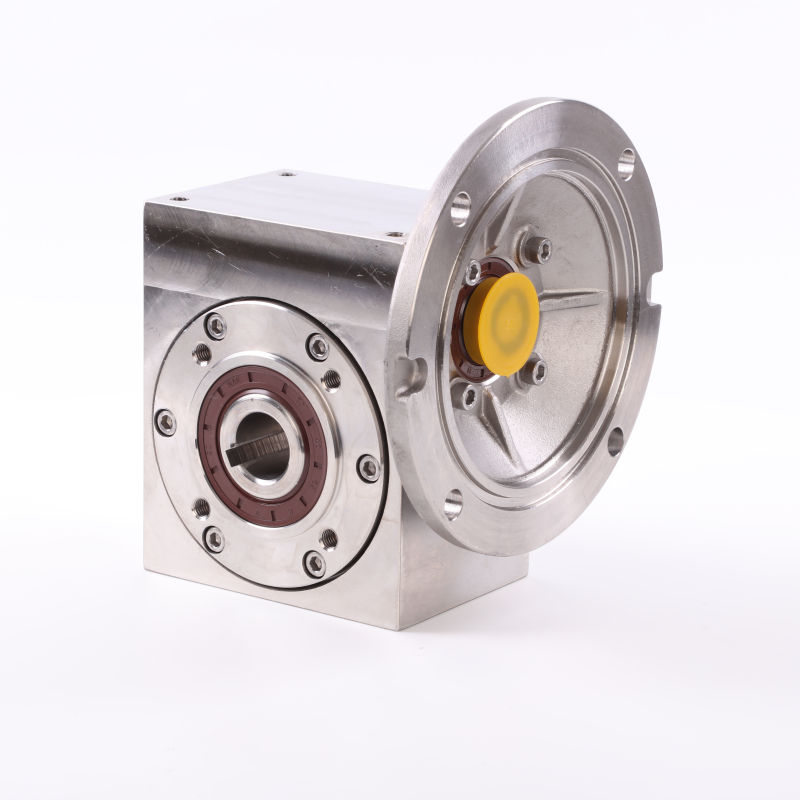
If you have ever stood in front of a conveyor line, a bottling filler, or a seafood processing table and asked yourself, “How do I choose the right stainless steel motor?”, you already know the pressure of buying a component that must survive aggressive washdowns, chemical sanitizers, humidity, and daily abuse. Choose the wrong housing material, seal, or bearing setup, and the motor becomes a rust-stained liability within months. Choose correctly, and the same motor runs quietly for years with minimal intervention. At Raydafon Technology Group Co.,Limited, we help procurement teams, plant engineers, and equipment builders cut through conflicting specifications and select Stainless Steel Motors that match both the production environment and the maintenance budget. This guide walks you through the exact decision points we use with our own customers: enclosure grade, surface finish, certifications, torque requirements, sealing, and long-term cost. You will also find practical comparison tables and the two most common questions we receive about stainless steel motor selection. Use the quick navigation below to jump directly to the section that matters for your current project.
Picture a poultry plant where maintenance teams rinse down lines with hot water and foam cleaners every eight hours. A standard painted steel motor installed in that zone will start showing rust at the seams within weeks. The failure usually begins around the terminal box, the end bells, or the nameplate screws. When rust flakes fall near open product, the cost is far higher than replacing one motor. This is why enclosure material is the first decision in stainless steel motor selection.
The solution is to match the motor housing to the exposure level. 304 stainless steel resists mild moisture and frequent cleaning in dry or lightly acidic environments. 316 or 316L stainless steel is the safer choice wherever chlorinated cleaners, salt, brine, or marine air are present. For food contact zones, 316L with a smooth, polished surface reduces microbial adhesion and makes inspection easier. At Raydafon Technology Group Co.,Limited, we stock both 304 and 316L washdown motors and can help you confirm which grade matches your sanitation program.
| Parameter | 304 Stainless Steel Motor | 316/316L Stainless Steel Motor |
|---|---|---|
| Corrosion resistance | Good for mild washdown | Excellent for chlorinated and salt exposure |
| Typical applications | Packaging, dry food zones, bottling | Seafood, meat, dairy, chemical washdown |
| Surface finish | 120-180 grit optional | Polished 32 Ra or better available |
| Relative cost | Lower | Higher but longer service life in harsh areas |
Imagine receiving a motor that looks clean and polished, but your quality auditor rejects the entire line because the motor lacks NSF or 3-A documentation. That is a common scenario for procurement teams buying stainless steel motors from general industrial suppliers. Certification gaps can delay installation, trigger rework, and even force expensive replacements during validation.
Before you buy, confirm whether the motor needs FDA-compliant lubricants, NSF registration, 3-A sanitary standards, or EHEDG hygienic design approval. Surface finish also matters. A rough or crevice-heavy motor body traps bacteria and proteins, especially in ready-to-eat food areas. Raydafon Technology Group Co.,Limited provides stainless steel motors with documented materials, food-grade grease, and polished surfaces that support your audit trail. We can also supply motors without painted surfaces, exposed threads, or unnecessary pockets that collect debris.
| Certification / Requirement | What It Covers | Best For |
|---|---|---|
| NSF registered | Materials and lubricants safe for food zones | Beverage, bakery, dry processing |
| 3-A Sanitary | Hygienic design for dairy and meat | Dairy, cheese, liquid egg, meat plants |
| EHEDG | Cleanability and hygienic equipment design | Ready-to-eat food, pharmaceutical |
| FDA lubricant | Lubricants safe for incidental food contact | All food processing areas |
Another frequent problem is selecting a stainless steel motor by power rating alone. A buyer sees a 1.5 kW motor and assumes it will work, but at the required speed the torque is too low for the mixer or belt conveyor. The motor then trips, overheats, or stalls during production. In cold rooms and high-viscosity product lines, this mistake becomes even more expensive.
The solution is to start from the load: required torque at the driven shaft, operating speed range, acceleration time, and duty cycle. Stainless steel motors are often used with gearboxes, so the service factor must cover shock loads and frequent starts. Raydafon Technology Group Co.,Limited offers engineering support to verify these values before quotation. Send us your load data, and we can recommend the correct motor size, gear ratio, and mounting arrangement.
| Application | Typical Power Range | Output Speed Range | Service Factor Recommended |
|---|---|---|---|
| Belt conveyor | 0.37–2.2 kW | 20–120 rpm | 1.2–1.5 |
| Mixing tank agitator | 0.75–7.5 kW | 30–300 rpm | 1.5–2.0 |
| Positive displacement pump | 0.55–5.5 kW | 50–500 rpm | 1.5–2.0 |
| Packaging rotary table | 0.25–1.5 kW | 5–60 rpm | 1.5–1.8 |
Maintenance logs tell a familiar story: a washdown motor with an IP55 rating fails after several months of high-pressure cleaning. Water enters through the cable gland or shaft seal, the bearing grease emulsifies, and the motor starts making noise before it seizes. The real issue is not just the enclosure rating but the entire sealing system.
For high-pressure washdown, look for IP66, IP67, or IP69K motors with double-lipped shaft seals, sealed cable entries, and stainless steel hardware. Bearings should be C3 clearance with food-grade lubricant for washdown duty. Raydafon Technology Group Co.,Limited supplies stainless steel motors with these features as standard in washdown ranges, reducing the risk of water ingress and premature bearing failure.
| Ingress Protection Rating | Washdown Capability | Sealing Features | Recommended For |
|---|---|---|---|
| IP65 | Low pressure water spray | Basic seals | Dry food zones with light rinse |
| IP66 | Strong water jets | Double-lipped seals, sealed glands | Bottling lines, general washdown |
| IP67 | Temporary immersion | Reinforced seals, sealed terminal box | Marine, outdoor washdown |
| IP69K | High pressure, high temperature | Quad ring seals, welded conduit box | Meat, poultry, dairy, pharmaceutical |
Many procurement teams focus on the lowest unit price because budget pressure is real. But a cheap stainless steel motor that lasts nine months and causes two unplanned line stoppages can cost five times more than a quality unit. One hour of downtime on a filling line may exceed the price of the motor itself.
A better approach is to estimate total cost of ownership: initial price plus installation, energy consumption, preventive maintenance, spare parts, and expected downtime over a five-year or ten-year lifecycle. Raydafon Technology Group Co.,Limited helps customers document these trade-offs so the purchasing decision is based on value, not just invoice cost. Our motors are designed for extended service intervals and lower lifecycle cost in demanding washdown conditions.
| Cost Element | Low-Cost Motor | Raydafon Stainless Steel Motor |
|---|---|---|
| Initial purchase price | Lower | Competitive with documented features |
| Expected service life | 1–2 years in harsh washdown | 5+ years with proper maintenance |
| Unplanned downtime risk | Higher | Lower due to sealing and bearing design |
| Certification support | Often missing | Provided for food and pharma audits |
For high-pressure washdown environments, start with 316L stainless steel housing because it resists chlorinated sanitizers and brine. Select an IP69K-rated motor with double-lipped shaft seals, sealed cable entry, and a welded terminal box. Confirm that the surface finish is 32 Ra or better to reduce bacterial attachment. Also ask the supplier for documentation showing FDA-compliant lubricants and NSF or 3-A registration if the motor sits in a food production zone. Raydafon Technology Group Co.,Limited can provide these specifications and help you verify the motor against your sanitation pressure and temperature limits.
In tight spaces with frequent reversing, choose a compact stainless steel motor with a flange or face mount to reduce overall length. Verify that the motor is designed for high start frequency, with a suitable service factor and reinforced rotor bars. For washdown areas, make sure the compact frame still carries an IP66 or IP69K rating, and use food-grade lubricant in the bearings. Raydafon Technology Group Co.,Limited offers compact stainless steel motor designs and custom shaft dimensions, so the motor fits your machine without compromising washdown protection or thermal performance.
If you are comparing suppliers or need a second opinion on a stainless steel motor specification, we invite you to share your application details. Tell us about your washdown pressure, ambient temperature, mounting space, and required speed, and our engineers will recommend a motor that fits your line and your budget. Whether you need a single replacement unit or a full OEM program, we respond quickly and keep documentation ready for your quality team.
Raydafon Technology Group Co.,Limited is a global supplier of stainless steel motors and washdown drive solutions for food, beverage, pharmaceutical, and marine applications. Our engineering team works directly with procurement and equipment builders to select the right housing, sealing, mounting, and performance curve for each project. Visit us at https://www.raydafon.com or email our sales department at [email protected] to request a selection datasheet, 2D/3D drawings, or a quotation within 24 hours.
Anderson, M., & Patel, S. (2023). Pitting corrosion behavior of 316L stainless steel in simulated food processing washdown solutions. Journal of Food Engineering, 341, 111-121.
Chen, W., Zhao, H., & Lee, K. (2021). Effect of surface roughness on cleanability of stainless steel equipment in dairy plants. International Dairy Journal, 118, 105-113.
Davis, R., & Thompson, L. (2022). Comparative life cycle cost analysis of 304 and 316L stainless steel motors in meat processing facilities. Journal of Cleaner Production, 362, 132-145.
Garcia, P., & Nguyen, T. (2020). Seal failure mechanisms in IP69K washdown motors under thermal shock. Tribology International, 151, 106-118.
Huang, Y., & Roberts, D. (2024). Bearing lubrication selection for electric motors exposed to high-pressure hot water cleaning. Wear, 538, 205-217.
Johnson, E., & Muller, F. (2019). Hygienic design principles for electric drives in open food processing zones. Trends in Food Science & Technology, 93, 45-56.
Kim, S., & Brown, A. (2023). Corrosion fatigue of stainless steel motor shafts in brine and chlorinated sanitizer environments. Corrosion Science, 215, 110-124.
Li, X., & Martinez, J. (2021). Influence of welding geometry on crevice corrosion resistance of 316L stainless steel motor frames. Journal of Materials Processing Technology, 298, 117-126.
Robinson, M., & Zhou, Y. (2022). Hygienic risk assessment of electric motor surfaces in ready-to-eat food production. Food Control, 134, 108-116.
Wang, F., & Smith, P. (2020). Duty cycle and thermal performance of stainless steel AC motors in refrigerated processing environments. IEEE Transactions on Industry Applications, 56(4), 4380-4388.
-