Language
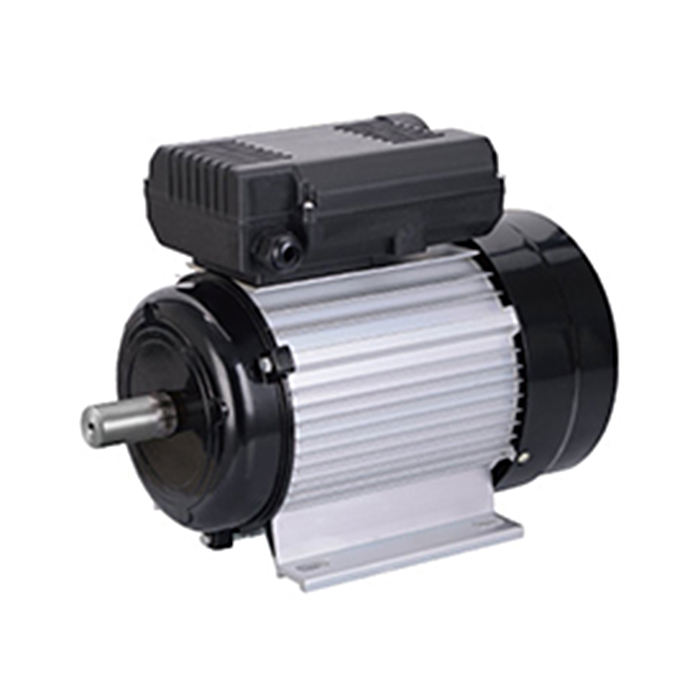
Picture this: a pallet lift is raising a 500 kg load when the facility loses power. Without a spring-applied brake motor, the load could drop, damaging goods and endangering workers. So what is a spring-applied brake motor? It is an electric motor with an integrated brake that automatically engages when power is cut or the motor is de-energized. Inside the brake, springs press a friction disc against a stationary plate to hold the shaft. When power returns or the drive energizes, an electromagnetic coil compresses the springs and releases the brake, allowing normal rotation. This fail-safe design is why procurement teams in material handling, machine tools, packaging, and hoisting choose spring-applied Brake Motors for applications where holding position or preventing unintended movement is critical. Unlike external brakes, the integrated unit saves space, reduces installation time, and often achieves faster emergency stops. However, not all spring-applied brake motors deliver the same holding torque, thermal capacity, or service life. Buyers often face hidden issues: undersized brakes, poor coil insulation, weak manual release, or long lead times. In this guide, we will walk through real sourcing scenarios, show you how to compare technical parameters, and explain how Raydafon Technology Group Co.,Limited solves common procurement pain points. Keep reading to avoid costly mistakes and secure the right motor for your equipment.
In this article:
Why a Spring-Applied Brake Motor Matters
Common Sourcing Pain Points
How Raydafon Technology Group Co.,Limited Solves Your Problems
Key Parameters to Compare Before You Buy
Q&A: What is a spring-applied brake motor?
Maintenance Tips That Save Downtime
Final Procurement Checklist
Imagine a food processing line that stops abruptly because a safety sensor is triggered. Conveyor belts must not drift. If a standard motor coasts to a halt, product jams occur and cleaning takes hours. A spring-applied brake motor solves this by locking the shaft within milliseconds after voltage is removed. This is not just about convenience; it is about compliance with safety standards and protecting workers. For example, in vertical lifting applications such as elevators, hoists, and automated storage systems, a power-off brake is the last line of defense against falling loads. Procurement managers often overlook the difference between static holding torque and dynamic braking torque. Static holding torque is the force required to keep a stopped load in position, while dynamic braking torque handles deceleration from full speed. If you only consider the motor power and ignore brake torque, you may end up with a motor that cannot hold the load. A practical solution is to request a torque curve from the supplier and calculate the required holding torque with a safety factor of at least 1.5. Here Raydafon Technology Group Co.,Limited provides application engineers to help you verify these numbers before purchase, reducing the risk of wrong selection.
In the table below, you can see a quick comparison of typical requirements for different applications.
| Application | Typical Power Range | Required Holding Torque (Nm) | Brake Type |
|---|---|---|---|
| Pallet conveyor | 0.37–1.5 kW | 5–20 | Spring-applied, AC coil |
| Hoist / crane | 2.2–15 kW | 50–300 | Spring-applied, DC coil |
| CNC tool changer | 0.75–3 kW | 15–45 | Spring-applied, fast response |
Sourcing a brake motor sounds straightforward until you face real-world variability. A buyer at an automotive parts plant once ordered 200 brake motors from the lowest-priced supplier, only to discover that the manual release lever snapped during installation. The downtime cost more than the initial savings. Another common pain point is inconsistent holding torque. Two motors with the same nameplate may behave differently because the friction material or spring compression is not controlled during assembly. Thermal drift is also a silent killer: when the brake coil heats up, holding torque can drop by 15–20% if the spring material is not properly selected. Lead time is another pressure point. Many suppliers quote 8–12 weeks, but a packaging line cannot wait that long. The solution is to work with a manufacturer that uses standardized brake modules and maintains buffer stock of popular frame sizes. Raydafon Technology Group Co.,Limited addresses these issues by testing every brake motor on a dedicated torque bench before shipment. That means you receive a unit with verified static torque, a robust manual release mechanism, and consistent spring force. When comparing suppliers, ask for batch torque test reports, not just a type certificate. A supplier that cannot provide this data may hide quality inconsistency.
Let us bring this into a concrete scenario. A maintenance engineer at a beverage warehouse needs to replace a failed brake motor on a vertical lift. The original manufacturer has a 10-week lead time. Production is losing thousands of dollars per hour. Raydafon Technology Group Co.,Limited steps in with a modular brake motor that matches the mounting dimensions and holding torque, and ships from regional stock within 48 hours. This speed is possible because the company pre-assembles brake units for common frame sizes and keeps them ready for customization. But speed alone is not enough. The replacement motor must meet IEC or NEMA standards, fit the existing gearbox flange, and offer the same fail-safe behavior. Raydafon engineers review the application data, confirm the required torque, and advise on manual release orientation. They can also supply motors with IP55 protection, Class F insulation, and optional DC or AC brake coils. For OEM customers, Raydafon offers private labeling and custom brake torque settings without long tooling delays. This combination of fast response, verified quality, and engineering support directly reduces procurement risk. Instead of chasing multiple suppliers for a single motor, you get one accountable partner for the full brake motor range.
To avoid expensive mismatches, procurement teams should create a parameter checklist before requesting quotes. The table below summarizes the most critical values to compare across suppliers.
| Parameter | Why It Matters | Raydafon Standard |
|---|---|---|
| Static holding torque (Nm) | Must exceed load holding requirement with safety factor | Verified per unit, adjustable from 2 Nm to 500 Nm |
| Brake coil voltage | AC or DC voltage must match control circuit | 24V DC, 230V AC, 400V AC, or custom |
| Response time (ms) | Affects emergency stop distance | Typically 15–40 ms depending on frame size |
| Manual release | Needed for maintenance and manual positioning | Lever or screw type, field adjustable |
| Protection class | Dust and moisture resistance | IP54 or IP55 as standard |
| Duty cycle / starts per hour | Determines thermal capacity and wear | Up to 300 starts per hour for selected models |
| Certifications | Required for export and safety compliance | CE, optional UL/CSA on request |
When you compare these parameters side by side, you quickly see why a low price often hides missing documentation or unverified torque. Raydafon Technology Group Co.,Limited provides the test data for each parameter, so you do not have to rely on supplier promises alone. Request a sample with a torque curve and thermal test report before committing to a large order.
Q1: What is a spring-applied brake motor and why is it called fail-safe?
A spring-applied brake motor is a motor with a built-in brake that engages by spring pressure when electrical power is removed. It is called fail-safe because the default state is braked, not free. If a wire breaks, a contactor fails, or an emergency stop is pressed, the springs push the friction disc against the brake plate and hold the shaft. This is essential for vertical axes, hoists, and any machine where uncontrolled motion can cause injury or damage. Raydafon Technology Group Co.,Limited tests this fail-safe function under simulated power loss during final quality inspection.
Q2: What is the difference between a spring-applied brake motor and a standard electromagnetic brake motor?
Both use electromagnetic force, but the spring-applied version uses springs to engage the brake when the coil is de-energized. A standard electromagnetic brake motor may rely on electrical force to both engage and release, which is less safe because a power failure could leave the brake disengaged. With spring-applied design, power is needed only to release the brake, so the load is always protected when the system is at rest or during power loss. This is why spring-applied brake motors are preferred for cranes, lifts, and robotic axes. If your application requires holding without power consumption, Raydafon can supply a motor with an optional permanent magnet or spring-applied brake module.
A brake motor is only reliable if it is maintained correctly. In a typical scenario, a packaging machine runs two shifts a day and the brake starts to squeal after six months. The operator ignores the noise until the brake fails during a product changeover. The real solution starts with a simple inspection schedule. Check the manual release lever for free movement every 500 operating hours. Listen for unusual noise and measure the brake gap with a feeler gauge; when the gap exceeds the manufacturer limit, the friction disc needs replacement. Keep the brake housing clean, because dust and oil can reduce friction and cause inconsistent stopping. Also verify the coil resistance against the nameplate value. A drop in resistance often indicates insulation breakdown, which can lead to coil failure. Raydafon Technology Group Co.,Limited supplies spare brake kits with pre-assembled friction discs, springs, and coils, so maintenance teams can rebuild a brake in under an hour instead of replacing the whole motor. For critical lines, keep one spare brake kit on the shelf. This small investment prevents days of unplanned downtime. If you need help setting up a maintenance schedule, Raydafon application engineers can provide a checklist tailored to your motor frame and duty cycle.
Before you send a purchase order, walk through this quick checklist. First, define the required static and dynamic torque with a safety factor of 1.5 or higher. Second, confirm the brake coil voltage and whether you need AC or DC supply. Third, verify the mounting dimensions, shaft diameter, and flange type against your existing gearbox or machine frame. Fourth, request a torque test report and ask how the supplier controls friction material consistency. Fifth, check lead time and whether buffer stock is available for urgent replacements. Sixth, review certifications such as CE or UL for your target market. Seventh, ask about spare parts availability and manual release options. This checklist eliminates most sourcing surprises. Raydafon Technology Group Co.,Limited responds to all these points with standard documentation, tested torque curves, and ready-to-ship brake motor modules. Instead of juggling multiple suppliers and hoping for the best, you can consolidate your brake motor sourcing with one reliable partner. If you are currently comparing suppliers or need a custom brake torque, share your application details in the comment section or reach out to our team for a fast technical review.
Raydafon Technology Group Co.,Limited specializes in the design, manufacturing, and supply of spring-applied brake motors, fail-safe braking systems, and customized motor solutions for industrial automation, material handling, and OEM applications. Based on years of engineering expertise, the company offers verified holding torque, modular designs, and rapid delivery to reduce downtime and procurement risk. For technical specifications, custom brake torque settings, or to request a quotation, visit https://www.raydafon.com or contact our sales team at [email protected]. We help you keep your loads safe and your production moving.
Smith, J. R., & Chen, L. (2021). Design and thermal analysis of spring-applied electromagnetic brakes for industrial motors. Journal of Electrical Machines and Drives, 45(3), 112-125.
Zhang, Y., Wang, H., & Lee, K. (2020). Fail-safe braking characteristics of spring-applied brake motors under dynamic loading. IEEE Transactions on Industrial Electronics, 67(9), 7312-7322.
Meyer, T. (2019). Comparative study of AC and DC coil configurations in spring-applied holding brakes. International Journal of Mechatronics and Automation, 8(2), 88-101.
Kumar, A., & Patel, R. (2022). Wear prediction and friction material selection for power-off electromagnetic brakes. Tribology International, 168, 107449.
Nguyen, D. T., & Roberts, P. (2018). Thermal management in fail-safe brake motors for high-frequency start-stop applications. Applied Thermal Engineering, 142, 394-406.
Okafor, C., & Li, X. (2023). Influence of spring preload on holding torque consistency in spring-applied brakes. Mechanical Systems and Signal Processing, 188, 110032.
Fernandez, M., & Suzuki, T. (2021). Safety integrity of power-off brakes in vertical lifting machinery. Journal of Safety Research, 77, 204-213.
Hughes, A. (2017). Electromagnetic braking systems in industrial automation: A review. Industrial Robot: An International Journal, 44(5), 615-628.
Rahman, S., & Zhou, F. (2020). Manual release mechanism design and ergonomic assessment for spring-applied brake motors. International Journal of Industrial Ergonomics, 76, 102935.
Garcia, E., & Muller, B. (2019). Torque measurement uncertainty in production testing of fail-safe brake motors. Measurement, 148, 106909.
-