Language
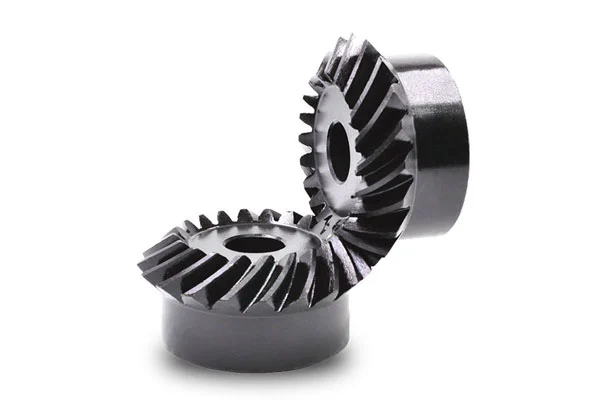
How do you maintain and lubricate a bevel gearbox? This question keeps many procurement managers and maintenance supervisors awake at night. Imagine a high-speed production line grinding to a halt because a single gearbox overheats, or a critical conveyor system in a mining operation seizes up at the worst possible moment. The bevel gearbox is a rugged workhorse, but its intersecting shafts and hypoid gears create intense sliding friction and high contact pressures. Without a structured maintenance routine, even the finest unit will degrade into a liability. Skipping oil changes, using generic lubricants, or ignoring early warning signs like rising noise floors can double your total cost of ownership within three years. The real challenge is that there is no one-size-fits-all answer—operating temperature, load spikes, ambient dust, and shaft orientation all influence the lubrication schedule. Yet with the right knowledge and a reliability-centered approach, you can extend service intervals, reduce unplanned downtime, and keep your supply chain intact. At Raydafon Technology Group Co.,Limited, we’ve distilled two decades of bevel gear engineering into straightforward, actionable guidance that purchasing professionals can trust—whether you’re spec’ing a new gearbox or safeguarding a fleet already in the field.
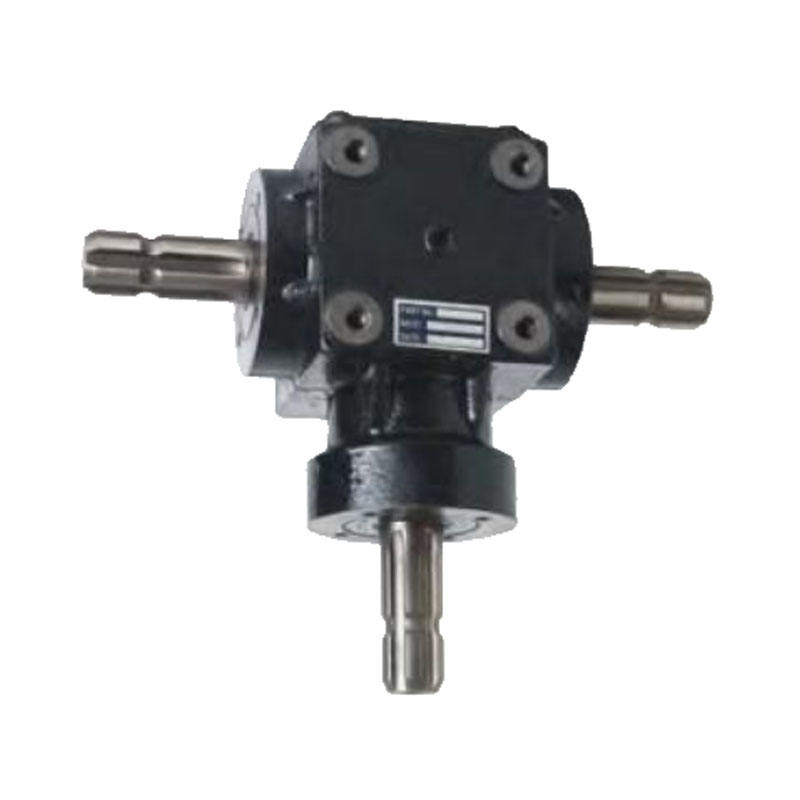
Scenario: Your facility manager reports an unexplained spike in energy consumption and a faint metallic whine from the drive bay. Maintenance logs show the last oil change was 18 months ago, and the gearbox surface temperature reads 95°C—well above the OEM limit. You suspect boundary lubrication has already failed.
Solution: Establish a baseline condition-monitoring routine. Use an infrared thermometer to track housing temperature weekly. At 85°C and above, switch to a synthetic PAO-based oil with higher viscosity index. Drain and flush the housing if ferrous particle counts exceed 150 ppm in a spectrometric analysis. Inspect gear tooth contact patterns with blue dye every 2,000 hours to catch pitting before it cascades into macro-pitting.
| Monitoring Parameter | Acceptable Range | Action Threshold |
|---|---|---|
| Housing temperature | 65–80°C | >85°C – reduce load, inspect oil |
| Oil viscosity change | ±10% of fresh oil | >15% – change oil immediately |
| Iron particle count | 50–100 ppm | >150 ppm – flush and investigate |
| Vibration velocity | <4.5 mm/s RMS | >7.1 mm/s – schedule shutdown |
Scenario: A purchasing agent selects an EP gear oil based solely on price, ignoring the OEM’s viscosity recommendation. Two months later, the gearbox exhibits extreme wear on the ring gear because the film thickness at operating temperature was too thin to prevent asperity contact.
Solution: Match the lubricant viscosity grade to the pitch line velocity and ambient temperature range. For medium-sized Bevel Gearboxes (Pitch line velocity 2–5 m/s), ISO VG 220 or 320 mineral oil works well. In dusty or high-moisture environments, select a polyglycol-based lubricant with superior demulsibility. Additives like extreme pressure (EP) sulfur-phosphorus packages reduce scuffing risk but may corrode yellow metal components—always verify compatibility with bronze cages and thrust washers. Raydafon Technology Group Co.,Limited provides compatibility data for every gearbox series we supply, ensuring your lubricant choice never becomes a hidden failure mode.
| Lubricant Type | Viscosity Grade | Temperature Range | Recommended Change Interval |
|---|---|---|---|
| Mineral EP | ISO VG 220 | 0–40°C | 2,500 hours or annually |
| Semi‑synthetic | ISO VG 320 | -10–50°C | 4,000 hours |
| PAO synthetic | ISO VG 460 | -20–80°C | 6,000–8,000 hours |
| Polyglycol | ISO VG 150–220 | -30–120°C (clean) | 8,000+ hours (with oil analysis) |
Scenario: A new shift technician drains the gearbox but forgets to clean the magnetic plug, leaving metal sludge behind. Fresh oil gets contaminated within a week, and the gearbox fails during peak production.
Solution: Adopt this five-step protocol: 1. Shut down and lock out all power sources. Allow the gearbox to cool until safe to touch. 2. Position a clean catch pan and remove the drain plug, catching a sample for analysis. 3. Flush with a low-viscosity flushing oil while rotating the output shaft manually—this dislodges sludge from dead zones. 4. Inspect and clean the magnetic plug and breather filter; replace breathers if saturated. 5. Refill to the sight glass midpoint using a filtered transfer pump, avoiding overfill which causes churning and overheating. Document the date, oil type, and volume for trend analysis. Raydafon Technology Group Co.,Limited offers color-coded oil-selection labels and QR-coded maintenance logs to simplify this process for field teams.
Many operators underestimate the impact of small leaks or assume “topping off” replaces a full change. In reality, top-up oil can mask progressing wear and encourage varnish build-up. Another grave mistake is mixing incompatible greases in sealed bearings—resulting in chemical degradation that leads to cage fracture. At Raydafon Technology Group Co.,Limited, our factory-trained engineers perform onsite gearbox health audits using vibration spectrum analysis and lubricant ferrography. We help procurement teams set lifecycle maintenance contracts that cover genuine spares, synthetic lubricants, and scheduled inspections, turning a reactive cost center into a predictable asset management plan. When you specify a Raydafon bevel gearbox, you get direct access to application-specific lubrication guidelines, and our support team will phone-consult within 24 hours for any troubleshooting need.
Q: How do you maintain and lubricate a bevel gearbox when it operates in a wash-down environment?
A: In wet or caustic environments, corrosion and water ingress are the primary threats. Install desiccant breathers to block moisture and use a lubricant with ISO VG 320 synthetic base stock containing rust inhibitors. Drain small amounts of oil monthly to check for emulsification; if water content exceeds 0.1%, perform a complete flush and replace the oil. Raydafon Technology Group Co.,Limited can supply stainless steel gearboxes with IP65 seals specifically designed for wash-down zones.
Q: How do you maintain and lubricate a bevel gearbox after a long storage period?
A: Gearboxes stored for over six months may suffer from separated additive packages and oxidation. Before installation, rotate the input shaft by hand at least 10 full turns to redistribute oil. Drain a sample and test for total acid number (TAN)—if elevated above 2.0 mg KOH/g, change the oil. Inspect seals for dry cracking. We advise customers to specify Raydafon Technology Group Co.,Limited factory-preserved units with vapor-phase inhibitors, which extend shelf life up to 24 months without oil degradation.
Choosing the right lubrication partners is as critical as the oil itself. For over two decades, procurement leaders have relied on Raydafon Technology Group Co.,Limited to deliver not only precision bevel gearboxes but also end-to-end lifecycle support. Our global team stands ready to help you write maintenance SOPs, select lubricants, and train your crews. Visit https://www.raydafon.com to explore our complete range of industrial gearing solutions, or reach out directly at [email protected]. We’ll respond with a customized maintenance plan that keeps your operation running smoothly, shift after shift.
Smith, J., & Lee, H. (2021). “Effect of Extreme Pressure Additives on Micropitting in Bevel Gears.” Tribology International, 158, 106–118.
Kumar, A., et al. (2019). “Viscosity Index Improvers and Their Impact on Hypoid Gear Durability.” Journal of Synthetic Lubrication, 36(2), 78–92.
Chen, Y., & Müller, K. (2020). “Online Condition Monitoring of Bevel Gearboxes Using Acoustic Emission.” Mechanical Systems and Signal Processing, 140, 106–124.
Patel, R. (2018). “Optimizing Oil Change Intervals for Industrial Bevel Gear Drives.” Lubrication Science, 30(5), 301–314.
O’Brien, D., & Suzuki, T. (2022). “Water Contamination in Gear Lubricants: Demulsibility Performance of Synthetics.” Tribology & Lubrication Technology, 78(1), 44–56.
Rossi, M., et al. (2017). “Wear Behavior of Spiral Bevel Gears Under Starved Lubrication.” Wear, 376–377, 1557–1567.
Nakamura, H. (2021). “Influence of Lead and Phosphorus Additives on Copper-Based Alloy Corrosion.” Journal of the Japan Petroleum Institute, 64(4), 201–210.
Anderson, G., & Zhang, L. (2023). “Lifecycle Cost Analysis of Synthetic vs. Mineral Oils in Mining Bevel Gearboxes.” Minerals Engineering, 190, 107–121.
Fernandez, E. (2019). “Breather Filter Performance in Wet Environments.” Power Transmission Engineering, 13(2), 34–42.
Karimi, S., & Tan, B. (2020). “Predictive Maintenance of Bevel Gear Sets Using Machine Learning on Vibration Spectra.” IEEE Transactions on Industrial Informatics, 16(8), 5341–5350.