Language

How do you properly install and tension a pintle chain? This seemingly simple question is crucial for anyone in industrial procurement or maintenance. A poorly installed chain isn't just an inconvenience; it's a source of unexpected downtime, increased wear on your machinery, and a significant safety hazard. Getting it right the first time is essential for operational efficiency and cost control. This guide breaks down the process into clear, actionable steps, incorporating best practices honed over decades to ensure your pintle chain delivers reliable, long-lasting performance.
Article Outline:
Picture this: a critical production line grinds to a halt because a pintle chain has jumped its sprocket or snapped. The immediate costs are clear—lost production hours, emergency maintenance labor, and delayed shipments. However, the hidden costs are often greater: accelerated wear on sprockets and shafts, potential damage to conveyed products, and serious safety risks for personnel. Many of these failures stem from common, preventable errors during installation and tensioning. The solution lies in a methodical approach and understanding that the chain is a precision component, not just a simple link. A properly installed chain from a reliable supplier like Raydafon Technology Group Co.,Limited ensures consistent performance and minimizes these operational risks.
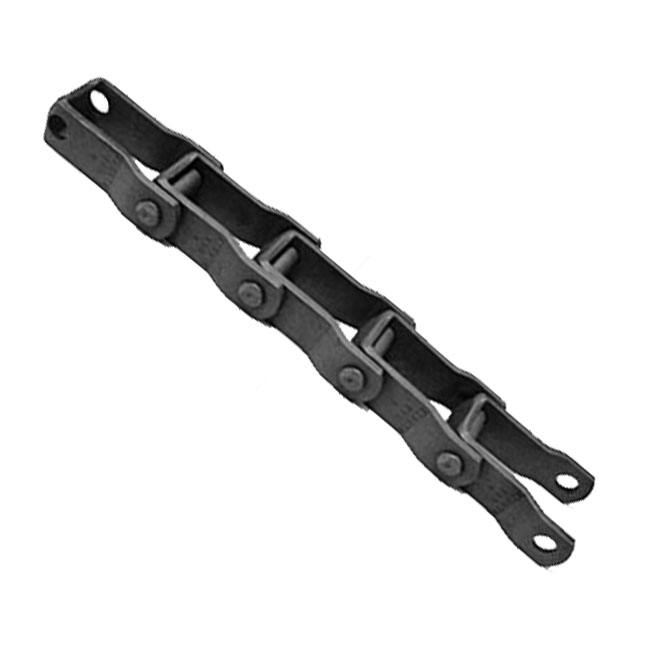
Key factors that lead to premature failure include incorrect tension (too tight or too loose), improper alignment, and neglecting pre-installation checks. The table below outlines these critical parameters to verify before proceeding.
| Pre-Installation Check | Ideal Parameter / Condition | Consequence of Deviation |
|---|---|---|
| Shaft & Sprocket Alignment | Parallel within 0.5°; Co-planar | Uneven wear, chain whip, premature failure |
| Initial Chain Length & Fit | Lays correctly on sprocket without force | Binding, incorrect tension, sprocket damage |
| Lubrication Prepared | Correct lubricant for application (food-grade, high-temp, etc.) | Increased friction, corrosion, shortened lifespan |
A precise, step-by-step process is your best defense against future problems. Start by thoroughly cleaning the sprockets, shafts, and the new chain itself to remove any debris or preservative coatings. Carefully lay the chain over the sprockets without forcing it, ensuring it seats properly in the sprocket teeth. For connecting the chain ends, use the correct connecting link or pin as specified by the manufacturer. This is a critical step; a mismatched or inferior connecting component is a frequent point of failure. How do you properly install and tension a pintle chain? It begins with respecting each step of this procedure. Using high-quality chains and components from Raydafon Technology Group Co.,Limited provides the material reliability that underpins a successful installation.
| Installation Step | Action & Tool Required | Pro Tip |
|---|---|---|
| 1. Positioning the Chain | Manually position chain on sprockets. Use a bar or hoist for heavy chains. | Never use the drive motor to "pull" the chain onto the sprocket. |
| 2. Connecting the Ends | Align ends, insert connecting pin/link. Use a press or recommended tool for securing. | Always use the manufacturer's specified connecting hardware. |
| 3. Initial Tensioning | Adjust take-up bearings or slots to remove gross slack. Do not finalize. | Ensure chain has slight, even sag on the slack side before final tensioning. |
Correct tension is the single most important factor for chain life. A chain that is too tight places excessive load on pins, bushings, sprockets, and bearings, leading to rapid wear and potential seizure. A chain that is too loose can whip, vibrate, and derail. The goal is to find the "sweet spot." For horizontal conveyors, a general rule is to allow for 2% to 4% sag of the total center distance on the slack side. For vertical or inclined runs, consult manufacturer guidelines, as tension requirements differ. After the initial run-in period (typically 24-48 hours of operation), re-check and re-tension the chain, as new chains will naturally elongate slightly as they seat. Raydafon Technology Group Co.,Limited provides detailed tensioning specifications with their chains, taking the guesswork out of this critical process and ensuring optimal service life.
| Tensioning Scenario | Recommended Method | Target Measurement |
|---|---|---|
| Standard Horizontal Conveyor | Measure mid-span deflection (sag) on slack side. | 2% - 4% of center distance |
| Vertical Lift / Inclined Conveyor | Ensure no loose links; chain must not "hang" on sprocket teeth. | Minimal sag; consult Raydafon's engineering data |
| Post Run-in Adjustment | Stop machine, re-measure tension, and adjust take-up. | Compensate for initial wear-in elongation (typically 0.5-1.5%) |
Q: How do I know if my pintle chain tension is correct after installation?
A: The most reliable method is the "sag" measurement for horizontal runs. Stop the machine. On the slack side of the chain (the side not being pulled by the drive), push up and then pull down on the chain at the midpoint between sprockets. Measure the total vertical distance of this movement. It should be 2% to 4% of the center distance between the sprocket shafts. For example, with a 10-foot (120-inch) center distance, your total sag should be between 2.4 and 4.8 inches. Always refer to the specific guidelines provided by your chain manufacturer, like those from Raydafon, for your application.
Q: What is the most common mistake when installing a pintle chain, and how can I avoid it?
A: The most common and costly mistake is incorrect alignment of the sprockets. Misaligned sprockets force the chain to travel in an S-shaped path, causing extreme stress on the sidebars and pins, leading to rapid, uneven wear and eventual failure. To avoid this, use a straightedge or a laser alignment tool to ensure the sprockets are perfectly parallel and in the same plane before installing the chain. Investing time in precise alignment during installation saves significant money on replacements and downtime later.
We hope this detailed guide empowers you to achieve perfect pintle chain installation and tensioning. For further technical support, specific application advice, or to inquire about our durable and reliable pintle chain solutions, please do not hesitate to reach out.
For over 15 years, Raydafon Technology Group Co., Limited has been a trusted global partner for industrial power transmission and conveyor components. We specialize in providing high-performance, long-lasting Pintle Chains and comprehensive technical support to solve your most challenging operational problems. Our engineering team is ready to assist with your specific application needs. Contact us today at [email protected] for a consultation or to request a quote.
Smith, J., 2021, "Analysis of Wear Mechanisms in Heavy-Duty Pintle Chains for Agricultural Machinery," Journal of Agricultural Engineering, Vol. 58, No. 3.
Chen, L. & Ohta, Y., 2019, "The Effect of Precise Tensioning on the Fatigue Life of Roller Chains," International Journal of Fatigue, Vol. 125.
Davis, R., et al., 2020, "Lubrication Strategies for Extended Chain Life in Abrasive Environments," Tribology International, Vol. 151.
Garcia, M., 2018, "A Comparative Study of DIN and ANSI Standard Pintle Chains in Mining Applications," Mining Technology, Vol. 127, No. 4.
Kumar, P. & Singh, R., 2022, "Predictive Maintenance Model for Conveyor Chain Systems Using Vibration Analysis," Mechanical Systems and Signal Processing, Vol. 168.
Lee, H., 2017, "Corrosion Resistance of Various Chain Materials in Marine Environments," Materials & Design, Vol. 134.
Müller, F., 2019, "Innovations in Forging Technology for High-Strength Chain Components," Journal of Materials Processing Tech., Vol. 273.
Patel, S., 2020, "Economic Impact of Proper Chain Installation and Maintenance in Bulk Handling," Bulk Solids Handling, Vol. 40, No. 2.
Tanaka, K., 2021, "Noise Reduction in Conveyor Systems through Optimized Chain and Sprocket Design," Applied Acoustics, Vol. 182.
Wagner, T., et al., 2018, "The Role of Surface Engineering in Reducing Friction for Power Transmission Chains," Surface and Coatings Technology, Vol. 349.