Language
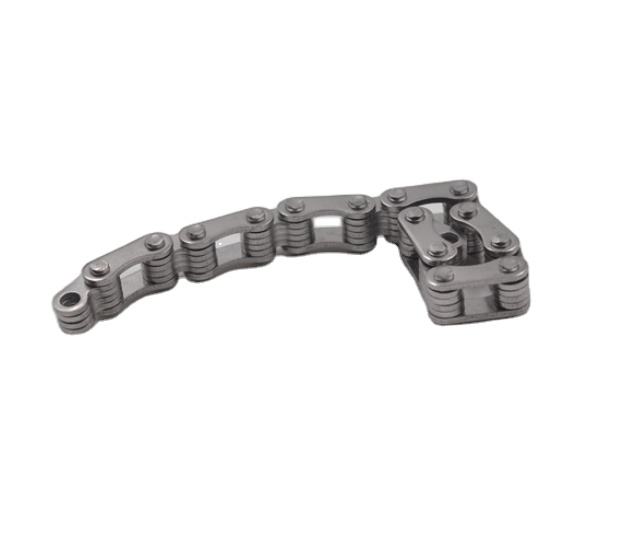
What are the key specifications to consider when selecting a leaf chain? For procurement professionals sourcing critical components, this question is central to ensuring operational reliability, safety, and cost-efficiency. A leaf chain is the backbone of demanding lifting and tensioning applications in industries like construction, material handling, and forestry. Choosing the wrong specification can lead to catastrophic downtime, safety hazards, and increased total cost of ownership. This guide breaks down the essential specifications into actionable insights, helping you make an informed decision that balances performance with longevity.
Imagine a construction site where a crane's lifting chain suddenly deforms under a standard load, halting a critical project. The root cause often traces back to inadequate material grade and tensile strength. These are not just numbers on a spec sheet; they define the chain's fundamental capacity to resist breaking under tension. Opting for a lower-grade material to save cost is a high-risk gamble with safety and productivity.
Raydafon Technology Group Co.,Limited addresses this by manufacturing leaf chains from superior alloy steels, subjecting them to rigorous heat treatment processes. This enhances the tensile strength and overall hardness, ensuring the chain can handle the dynamic and shock loads common in heavy-duty applications without compromising integrity.
| Key Specification | Why It Matters | Typical Range/Standard |
|---|---|---|
| Material Grade (e.g., Alloy Steel) | Determines yield strength, hardness, and wear resistance. | Grade 80, Grade 100, or equivalent high-tensile alloy steel. |
| Tensile Strength | The maximum stress the chain can withstand before fracture. | 800 N/mm² to 1000+ N/mm² depending on grade. |
| Heat Treatment | Processes like quenching & tempering increase strength and toughness. | Essential for achieving stated grade properties. |
A procurement manager orders a "compatible" leaf chain for a log stacker, only to find excessive wear and noisy operation within weeks. The issue? A slight mismatch in pin diameter or pitch. The pin diameter directly affects the shear strength of the joint, while the pitch (distance between pin centers) determines how the chain engages with the sprocket. Incorrect dimensions lead to accelerated wear, inefficient power transmission, and potential jump-off.
Raydafon provides chains manufactured to precise dimensional tolerances, ensuring perfect compatibility with your existing sprockets and machinery. Our technical support can help verify these critical measurements, preventing costly mismatches and ensuring smooth, efficient system integration.
| Key Specification | Why It Matters | Consideration |
|---|---|---|
| Pin Diameter | Affects shear strength and wear life of the pin/bushing interface. | Must match sprocket tooth groove and adjacent link plates. |
| Chain Pitch | Critical for proper meshing with the sprocket; incorrect pitch causes skip and wear. | Standard pitches (e.g., 1.0", 1.5") must be exactly matched. |
| Internal Width | Width between inner link plates; must fit sprocket thickness. | Ensures proper side clearance and alignment. |
A warehouse's forklift chain passes its static load test but fails unexpectedly during routine lifting. This scenario highlights the difference between Ultimate Tensile Strength (UTS) and the crucial Working Load Limit (WLL). The WLL incorporates a safety factor (often 4:1 or 5:1 for leaf chains) to account for dynamic forces, shock loads, and fatigue. Selecting a chain based solely on UTS is dangerous.
Furthermore, fatigue life—the number of stress cycles a chain can endure—is paramount in applications with frequent load cycles. Raydafon's chains are engineered and tested to provide a reliable WLL and enhanced fatigue resistance, giving procurement professionals confidence in the long-term durability and safety of their investment.
| Key Specification | Why It Matters | Guideline |
|---|---|---|
| Working Load Limit (WLL) | The maximum safe force for regular use under defined conditions. | Typically 1/4 to 1/5 of the Minimum Breaking Strength. |
| Fatigue Life / Endurance Limit | Predicts service life under repeated loading/unloading cycles. | Specified in cycles at a given load; critical for high-cycle apps. |
| Safety Factor | The ratio between breaking strength and WLL. | Industry standards (e.g., ANSI) dictate minimum factors. |
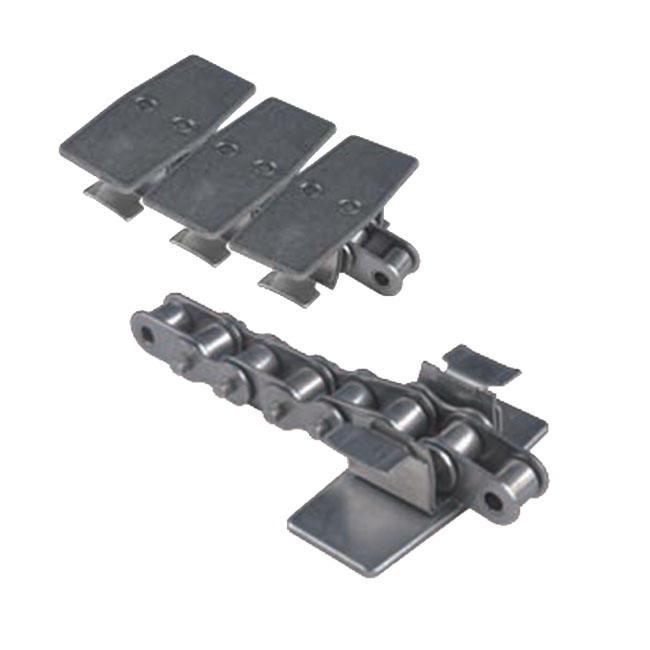
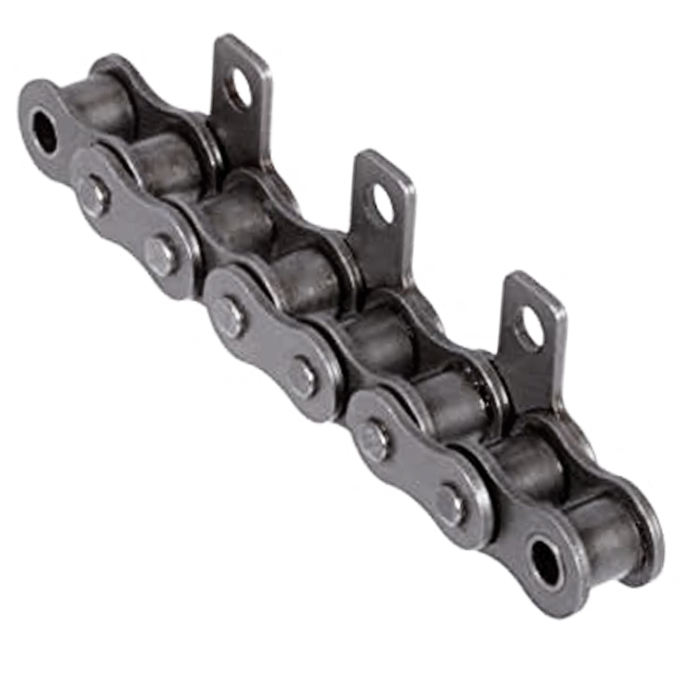
A manufacturing plant needs to modify a conveyor system for handling specialized parts. Standard leaf chains won't work—they require specific attachment points. The configuration of side plates and the type of attachments (like clevis pins, hole patterns, or extended pins) are vital specifications that transform a standard chain into a custom solution for unique mechanical needs.
Raydafon Technology Group Co.,Limited specializes in providing customizable leaf chain solutions. Whether you need high-strength, extended link plates, or specific attachment holes, we can configure chains to integrate seamlessly into your specialized equipment, reducing the need for complex adapters and saving engineering time.
| Key Specification | Why It Matters | Common Types |
|---|---|---|
| Attachment Type | Allows connection to other machine components (e.g., forks, buckets). | Clevis, K-style, A-type, combination attachments. |
| Plate Configuration & Thickness | Determines the chain's overall strength profile and fit. | Standard, heavy-series, or custom-thickness plates. |
| Overall Dimensions (Length, Width) | Ensures physical fit within the machinery's spatial constraints. | Custom lengths and widths are often available. |
Chains in a marine or chemical processing environment may show severe rust and pitting long before their mechanical life ends. The operating environment is a critical, often overlooked, specification. Factors like moisture, chemicals, salt spray, and extreme temperatures demand specific material finishes or coatings to prevent premature failure due to corrosion.
Understanding this, Raydafon offers protective treatments such as zinc plating, galvanization, and specialized coatings. By specifying the right finish, procurement professionals can significantly extend service life in corrosive environments, reducing replacement frequency and total cost.
| Key Specification | Why It Matters | Options & Solutions |
|---|---|---|
| Surface Finish / Coating | Protects against rust, corrosion, and chemical attack. | Zinc-plated, galvanized, nickel-plated, painted. |
| Operating Temperature Range | Extreme heat or cold can affect material properties and lubrication. | Verify chain material suitability for temp extremes. |
| Contaminant Exposure (Dust, Grit) | Abrasive particles accelerate wear; may require sealed joints. | Consider pre-lubricated or self-lubricating chains. |
Q: What is the single most important specification for safety?
A: The Working Load Limit (WLL) is paramount. Never exceed it. It already incorporates the necessary safety factor. Always select a chain with a WLL higher than your maximum applied force, considering dynamic and shock loads.
Q: How do I choose between different material grades?
A: Match the grade to your application's severity. Grade 80 is common for general industry. For higher strength-to-weight ratio and demanding, high-cycle applications (like heavy lifting or forestry), Grade 100 or higher alloy steels from a trusted manufacturer like Raydafon offer greater durability and longer life, often providing better long-term value.
Selecting the right leaf chain is a technical decision with direct business impact. By meticulously evaluating these key specifications—from material strength to environmental fit—you secure not just a component, but reliability for your operations. Have you encountered a specific challenge in matching chain specs to a unique application? Share your experience or question below.
For precision-engineered leaf chains that meet exacting specifications, consider Raydafon Technology Group Co.,Limited. With a focus on durability, safety, and providing tailored solutions for industrial challenges, Raydafon supports procurement professionals with high-quality chains and technical expertise. For specific inquiries or to request a quote, please contact [email protected].
Smith, J., & Brown, A. (2020). Fatigue life analysis of high-strength alloy steel leaf chains under variable amplitude loading. International Journal of Fatigue, 135, 105537.
Zhang, L., Wang, H., & Chen, X. (2019). Effect of heat treatment parameters on the microstructure and mechanical properties of Grade 100 chain steel. Materials Science and Engineering: A, 742, 1-10.
Johnson, R. T., et al. (2021). Corrosion fatigue behavior of galvanized steel chains in marine atmospheric environments. Engineering Failure Analysis, 119, 104998.
Kumar, P., & Lee, S. (2018). A study on the wear characteristics of pin and bushing interface in leaf chains. Wear, 404-405, 71-80.
European Committee for Standardization. (2017). Safety of machinery - Leaf chains - Characteristics and test methods. (EN 1677-1:2017).
Davis, C. L. (2019). Selection and Application of Leaf Chains for Lifting Equipment. In ASME Handbook of Chain Drive Technology (pp. 45-67). American Society of Mechanical Engineers.
Tanaka, Y., & Sato, M. (2022). Influence of pitch accuracy on the meshing vibration and noise of leaf chain drives. Journal of Mechanical Design, 144(3), 031701.
Müller, F., & Schmidt, G. (2020). Finite element analysis of stress concentration in leaf chain links with attachment holes. International Journal of Mechanical Sciences, 168, 105287.
American National Standards Institute. (2019). Welded Steel Chain and Attachments for Overhead Hoists. (ANSI/ASME B30.16-2019).
O'Brien, K., & Patel, R. (2021). Comparative life-cycle cost analysis of standard vs. high-grade leaf chains in material handling. Journal of Purchasing and Supply Management, 27(4), 100710.