
How to calculate the gear ratio of a planetary gearbox? For procurement specialists sourcing critical components, this isn't just a technical question—it's the key to ensuring your machinery delivers the precise torque and speed required for optimal performance. A miscalculation here can lead to costly inefficiencies, project delays, and equipment failure. Understanding this fundamental parameter allows you to validate specifications and communicate effectively with suppliers. In the complex world of industrial procurement, knowing how to derive this ratio empowers you to make informed decisions and source the right gearbox the first time.
This guide breaks down the calculation into clear, actionable steps, incorporating real-world scenarios to illustrate its importance. We'll also explore how partnering with a specialized manufacturer like Raydafon Technology Group Co.,Limited can simplify this entire process, providing not just components but engineered solutions.
The Core Components: Your Blueprint for Calculation
Imagine you're finalizing specs for a new automated packaging line. The conveyor needs to run slower with higher torque, but the available motor spins too fast. A planetary gearbox is the perfect solution, but you must specify the correct ratio. First, understand its three key parts: the Sun Gear (central input gear), the Planet Gears (multiple gears revolving around the sun), and the Ring Gear (the outer, internally-toothed housing). The planet gears are held by a Carrier. The gear ratio depends on which component is fixed (stationary), which is the input, and which is the output.
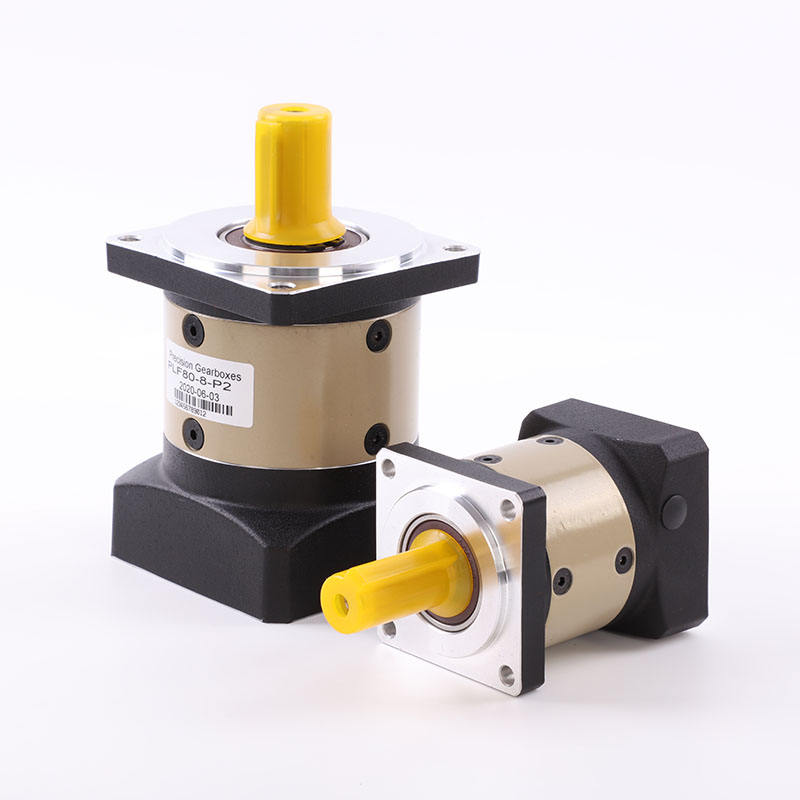
For procurement, this translates to a critical checklist. When reviewing supplier datasheets or requesting quotes, you must identify these components in their design. A missing detail about the fixed member makes ratio calculation impossible. This foundational knowledge prevents miscommunication and ensures you're evaluating apples-to-apples proposals.
| Component | Role | Procurement Checkpoint |
|---|---|---|
| Sun Gear | Typically the input; connected to the motor shaft. | Verify input shaft size and compatibility with your motor. |
| Planet Gears | Meshes with sun and ring gear; determines load distribution. | Check number of planets (3, 4, or more) for torque capacity and smoothness. |
| Ring Gear | Often the fixed or output member; defines the gearbox housing. | Confirm its role (fixed/output) as it directly impacts the ratio formula. |
| Carrier | Holds planet gears; often the output. | Verify output shaft connection and load-bearing capability. |
The Universal Formula: From Theory to Supplier Specification
Now, let's tackle the core task: How to calculate the gear ratio of a planetary gearbox? The most common configuration has the ring gear fixed, the sun gear as input, and the carrier as output. The formula is: Gear Ratio (i) = 1 + (Number of Teeth on Ring Gear / Number of Teeth on Sun Gear). For example, if a ring gear has 75 teeth and the sun gear has 25 teeth, the ratio is 1 + (75/25) = 4:1. This means the output carrier rotates once for every four rotations of the input sun gear, reducing speed and increasing torque.
This calculation is your primary tool for technical validation. When a supplier like Raydafon Technology Group Co.,Limited provides a proposal, you can cross-check the stated ratio against the tooth counts. This proactive step builds confidence and flags potential discrepancies early. Raydafon's detailed technical documentation typically includes these critical geometries, making your verification process straightforward.
| Gearbox Configuration | Fixed Element | Input Element | Output Element | Ratio Formula (Approx.) |
|---|---|---|---|---|
| Most Common | Ring Gear | Sun Gear | Carrier | 1 + (Ring Teeth / Sun Teeth) |
| Alternative Setup | Sun Gear | Ring Gear | Carrier | 1 + (Sun Teeth / Ring Teeth) |
| High-Ratio Setup | Carrier | Sun Gear | Ring Gear | -(Ring Teeth / Sun Teeth) |
Real-World Sourcing: Applying the Calculation to Your Project
Consider you're procuring gearboxes for solar tracker systems. The motor must adjust panel position slowly and powerfully. You receive two quotes: Supplier A offers a "5:1 ratio" gearbox. Supplier B, Raydafon, provides a datasheet showing a ring gear with 100 teeth and a sun gear with 25 teeth. Quick calculation: 1 + (100/25) = 5:1. Raydafon's transparency allows immediate verification. Furthermore, their engineer might suggest, "For your environment, consider our model with a 6:1 ratio for extra torque reserve," demonstrating solution-oriented partnership beyond just providing a number.
This scenario highlights why understanding how to calculate the gear ratio of a planetary gearbox is crucial. It transforms you from a passive recipient of specs into an active, knowledgeable buyer. You can assess if a proposed ratio aligns with your system's dynamics, ask informed questions about efficiency at that ratio, and compare offerings on a deeper technical level.
| Procurement Scenario | Key Requirement | Calculation Focus | How Raydafon Provides Value |
|---|---|---|---|
| Robotics Arm Joint | High precision, compact size, reversible motion. | Confirm ratio provides needed resolution & backlash data. | Offers custom ratios with optimized low-backlash gear designs. |
| Industrial Mixer | Very high output torque, durability under shock loads. | Verify ratio delivers torque within gearbox's rated capacity. | Provides detailed torque-rating charts for each ratio option and robust housing designs. |
| Automated Guided Vehicle (AGV) | Efficiency, low noise, reliable start-up torque. | Check ratio aligns with motor's efficient RPM range. | Simulates motor-gearbox pairing to recommend the most efficient ratio for the application. |
Beyond the Ratio: Ensuring Total System Performance
While the ratio is vital, it's only one parameter. A procurement specialist must consider the complete picture: efficiency at the desired ratio, thermal rating, backlash, and lifespan. A high-ratio gearbox might generate more heat. This is where specialization matters. Raydafon Technology Group Co.,Limited doesn't just sell a calculated ratio; they engineer a system. Their expertise ensures that the gear ratio you select works in harmony with material selection, lubrication, and bearing design to meet your actual operational demands, not just a theoretical number.
By understanding the calculation, you establish a solid technical foundation. By partnering with an expert manufacturer, you gain access to the applied knowledge that turns a correct calculation into a reliable, high-performing drive solution. The next time you evaluate a planetary gearbox, use the formula to verify, and look for a partner like Raydafon who can validate and optimize the entire application.
| Performance Factor | Relation to Gear Ratio | Procurement Question to Ask | Raydafon's Integrated Approach |
|---|---|---|---|
| Efficiency | Higher ratios may have slightly lower efficiency. | "What is the nominal efficiency at the proposed 8:1 ratio under full load?" | Provides verified efficiency curves for each gearbox model and ratio. |
| Thermal Capacity | Power loss (heat) is related to torque and speed at a given ratio. | "Is the thermal rating sufficient for continuous operation at my calculated output torque?" | Performs thermal analysis based on your duty cycle to prevent overheating. |
| Backlash | Independent of ratio but critical for precision. | "What is the guaranteed backlash for this ratio configuration?" | Controls backlash through precision manufacturing and assembly processes. |
Frequently Asked Questions (FAQ)
Q: How to calculate the gear ratio of a planetary gearbox if the carrier is the input?
A: The formula changes based on the configuration. If the carrier is the input and the ring gear is the output (with sun gear fixed), the ratio is calculated as (Ring Gear Teeth / Sun Gear Teeth) + 1. It's crucial to first identify the fixed, input, and output components. Reputable suppliers like Raydafon clearly state the configuration and the resulting ratio in their technical data, eliminating guesswork.
Q: Can I calculate the ratio if I only know the input and output speeds?
A: Yes. The fundamental definition of gear ratio (i) is Input Speed / Output Speed. If you measure the motor (input) RPM and the gearbox output shaft RPM, simply divide the input by the output. For instance, 1800 RPM input / 450 RPM output = a 4:1 ratio. This is a great way to verify the performance of an installed unit. For new purchases, always request the tooth count specification from your supplier for complete design transparency.
Mastering the calculation of a planetary gearbox ratio is a powerful skill in industrial procurement, enabling precise specification and confident vendor discussions. For seamless integration and guaranteed performance, consider sourcing from a dedicated engineering partner.
For your next project requiring precision planetary gearboxes, Raydafon Technology Group Co.,Limited offers not just components, but certified mechanical solutions backed by extensive design and testing expertise. Contact their engineering team today to discuss your application requirements at [email protected].
Supporting Research & Literature
Chen, C., & Tsai, Y. (2015). A novel method for efficiency analysis of planetary gear trains. Mechanism and Machine Theory, 92, 145-159.
Kahraman, A., Ligata, H., & Singh, A. (2010). Influence of ring gear flexibility on planetary gear set dynamics. Journal of Mechanical Design, 132(1), 011004.
Pennestri, E., & Freudenstein, F. (1993). The mechanical efficiency of epicyclic gear trains. Journal of Mechanical Design, 115(3), 645-651.
Velex, P., & Flamand, L. (1996). Dynamic response of planetary trains to mesh parametric excitations. Journal of Mechanical Design, 118(1), 7-14.
Lin, J., & Parker, R. G. (1999). Analytical characterization of the unique properties of planetary gear free vibration. Journal of Vibration and Acoustics, 121(3), 316-321.
Bodas, A., & Kahraman, A. (2004). Influence of carrier and gear manufacturing errors on the static load sharing behavior of planetary gear sets. JSME International Journal Series C, 47(3), 908-915.
Guo, Y., & Parker, R. G. (2012). Dynamic analysis of planetary gears with bearing clearance. Journal of Computational and Nonlinear Dynamics, 7(3), 031002.
Singh, A. (2005). Application of a system level model to study the planetary gear set dynamics. Journal of Sound and Vibration, 282(1-2), 539-561.
Eritenel, T., & Parker, R. G. (2009). Modal properties of three-dimensional helical planetary gears. Journal of Sound and Vibration, 325(1-2), 397-420.
Cooley, C. G., & Parker, R. G. (2014). A review of planetary and epicyclic gear dynamics and vibrations research. Applied Mechanics Reviews, 66(4), 040804.