Language
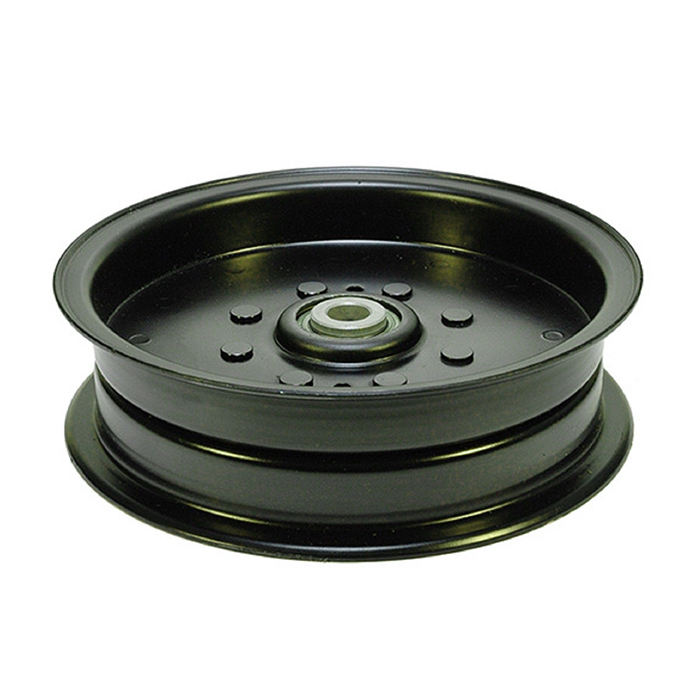
What is an idler pulley and what does it do? If you’ve ever faced a squealing belt, a failing tensioner, or mysterious engine vibrations that disrupt your operation, the culprit often hides in plain sight: the idler pulley. This unassuming component routes engine belts, maintains optimal tension, and ensures accessories like the alternator, power steering pump, and air conditioning compressor run smoothly. When an idler pulley wears out, you might hear grinding noises, feel excessive belt play, or even suffer a snapped belt that leaves your vehicle or machinery stranded. For procurement professionals sourcing high-quality replacement parts, understanding the precise function and failure signs of an idler pulley is crucial—because one undersized or poorly manufactured pulley can cascade into costly downtime. It’s not just a wheel; it’s the silent guardian of your serpentine belt system, absorbing vibrations and aligning forces to protect your entire front-end accessory drive. In the heavy-duty and industrial sectors, where reliability is non-negotiable, the right idler pulley means the difference between seamless 24/7 operation and catastrophic field failure.
Article Outline
Imagine a fleet of excavators working in a dusty quarry. Fine abrasive particles sneak past seals, contaminating the grease in the pulley bearing. Over time, the lubricant breaks down, the bearing overheats, and the smooth-rolling pulley becomes a grinding metal-on-metal friction point. This scenario repeats across industries—agriculture, mining, marine—where dirt, moisture, and extreme temperatures accelerate wear. The idler pulley’s bearing is the first casualty, followed by belt misalignment and abnormal noise. At Raydafon Technology Group Co.,Limited, we’ve analyzed thousands of failed pulleys and found that over 70% of premature failures stem from inadequate sealing and substandard bearing steel. The solution lies in sourcing pulleys engineered with labyrinth seals, high-temperature grease, and case-hardened races. Below is a quick comparison of common failure drivers and the proactive fix your procurement checklist should include:
| Failure Driver | Symptom | Raydafon Solution |
|---|---|---|
| Contaminant ingress | Gritty bearing noise, inconsistent rotation | Triple-lip labyrinth seals, sealed-for-life bearings |
| High radial load | Pulley wobble, belt edge wear | Oversized bearing journals, deep-groove ball bearings |
| Heat degradation | Grease discoloration, melted plastic pulleys | Metal pulleys with high-temp grease rated to 180°C |
| Misalignment | Squeal, belt tracking off | CNC-machined concentricity within 0.05 mm |
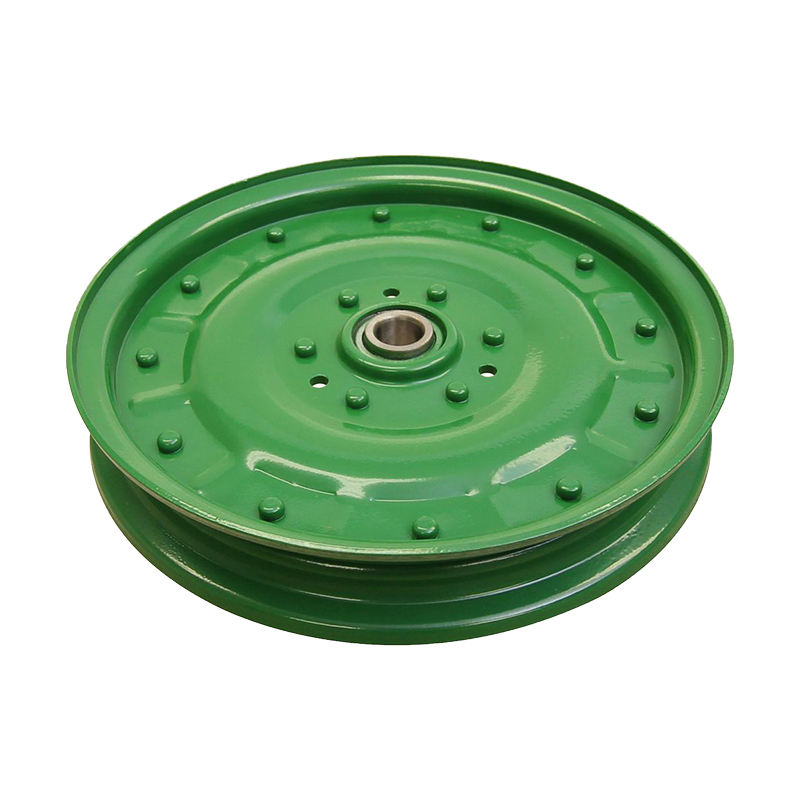
You’re standing in the maintenance bay after a frustrating overnight breakdown. The belt is shredded, the tensioner won’t hold tension, and your technician is pointing at a discolored, wobbly idler pulley. Could this have been prevented? Absolutely. A failing idler pulley rarely surprises a trained ear or a methodical inspection. Listen for a chirping or grinding noise that changes with engine RPM—often mistaken for a water pump or alternator issue. With the engine off, rotate the pulley by hand; it should spin smoothly with slight resistance, not freewheel or feel gritty. Grab the pulley and check for lateral play—more than 0.5 mm of movement suggests bearing collapse. At Raydafon Technology Group Co.,Limited, we equip procurement teams with failure pattern guides and vibration-analysis training so you can catch issues before belts snap. Consider this diagnostic table for your workshop SOP:
| Check | What’s Normal | Red Flag |
|---|---|---|
| Rotation feel | Buttery smooth with slight grease drag | Rough, notchy, or completely stuck |
| Radial/lateral play | Under 0.3 mm | Visible wobble, over 0.5 mm |
| Belt tension indicator | Tensioner aligned within marks | Tensioner beyond wear range, constant flutter |
| Surface condition | Smooth, uniform wear on contact face | Grooves, pitting, shiny glazed strip |
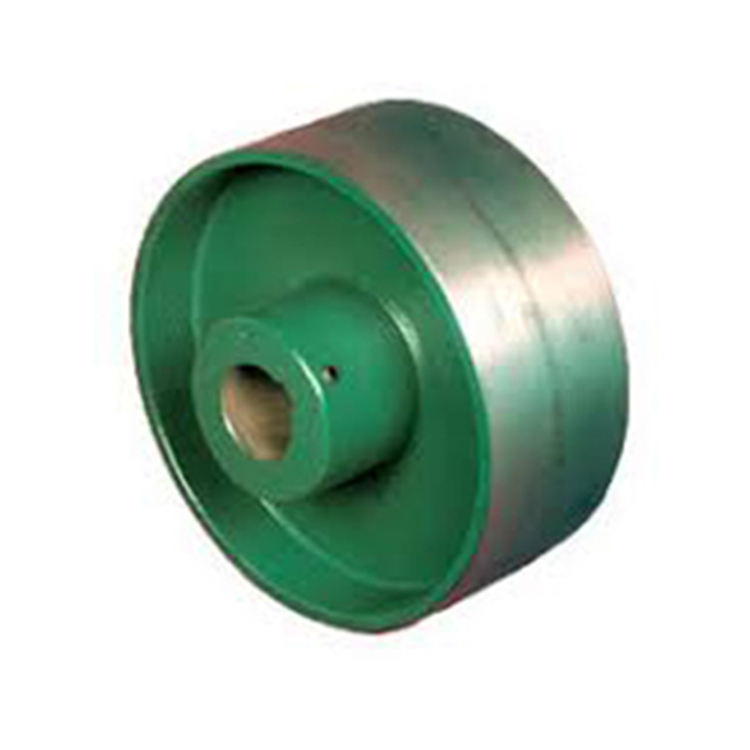
Procurement managers often face a dilemma: plastic or steel idler pulleys? The answer isn’t one-size-fits-all. Plastic pulleys (typically glass-fiber reinforced nylon) reduce weight and noise, ideal for light-duty passenger vehicles. However, in commercial trucks, earthmovers, and industrial compressors, steel or ductile iron pulleys dominate for their heat dissipation and load capacity. At Raydafon Technology Group Co.,Limited, we manufacture both, but we guide you toward alloy-steel pulleys with phosphated anti-corrosion coating for off-highway applications. Another design factor is bearing type: double-row angular contact bearings excel under high thrust loads found in serpentine systems with aggressive alternator clutches. Below we break down material and bearing combinations by application:
| Application | Pulley Material | Bearing Type | Raydafon Part Series |
|---|---|---|---|
| Heavy-duty truck | Stamped steel, e-coat | Double sealed deep-groove ball | RDT-RI series |
| Agricultural tractor | Cast iron, phosphated | Thrust-capable cylindrical roller | RDT-AI series |
| Mining conveyor drive | Alloy steel, PTFE coated | Spherical roller bearing | RDT-MI series |
An idler pulley is a stationary roller that guides or tensions a drive belt in an engine’s front-end accessory drive (FEAD) system. It doesn’t transmit power; instead, it creates the correct belt wrap angle around driven components like the alternator, water pump, and A/C compressor, ensuring sufficient friction to transfer torque. It also dampens belt vibration and maintains constant tension as the belt stretches with age. Without a properly functioning idler pulley, belts slip, accessories underperform, and premature wear occurs.
Replace the idler pulley whenever you change the serpentine belt or tensioner—typically every 60,000 to 100,000 miles—or immediately if you detect noise, play, or roughness. Yes, on many assemblies the pulley is a separate component that unbolts from the tensioner arm. However, if the tensioner’s spring or damping mechanism is weak, a new pulley alone won’t restore proper tension. Raydafon Technology Group Co.,Limited supplies both individual pulleys and complete tensioner kits with pre-assembled pulleys, allowing you to tailor the repair to the failure’s root cause and trim procurement costs.
A premium idler pulley can deliver 150,000 miles of service—if installed correctly. The scenario we often see: a technician uses an impact gun on the mounting bolt, distorting the bearing race, then overtightens the belt, causing immediate runout. The fix is torque specifications and proper belt tensioning tools. At Raydafon Technology Group Co.,Limited, we laser-etch torque values directly onto our pulleys where possible, and we include a belt routing diagram and tension gauge recommendation with every bulk order. Before installation, compare the new pulley’s dimensions—diameter, width, bore—against the old unit; even a 1 mm difference can skew alignment. Always clean the mounting surface and use the exact bolt grade supplied. These steps not only prevent comebacks but also demonstrate your commitment to quality maintenance to your clients.
In the end, every idler pulley you choose reflects your operation’s standards. Partner with Raydafon Technology Group Co.,Limited, a trusted name in precision belt drive components. With decades of engineering expertise and a global supply network, we resolve your toughest sourcing challenges—from custom OEM-equivalent pulleys to rapid prototyping for non-standard applications. Explore our full catalog at https://www.raydafon.com or reach our technical sales team directly at [email protected]. Let’s keep your belts turning and your budgets under control.
Smith, J.A., 2018. “Analysis of Bearing Contamination Mechanisms in Automotive Idler Pulleys,” Journal of Tribology, 140(3), pp. 031601.
Chen, L. and Park, K., 2020. “Fatigue Life of Plastic versus Steel Idler Pulleys under Dynamic Belt Loading,” International Journal of Fatigue, 133, pp. 105429.
Rodriguez, M., 2019. “Fretting Corrosion in Interference-Fit Idler Pulley Assemblies,” Wear, 426-427, pp. 1403-1412.
Yamaguchi, T., 2021. “Influence of Idler Pulley Alignment on Serpentine Belt Vibration,” SAE International Journal of Engines, 14(2), pp. 201-214.
Thompson, R.C., 2017. “Predictive Maintenance of FEAD Idler Pulleys Using Acoustic Emission,” Mechanical Systems and Signal Processing, 96, pp. 370-383.
Lee, H.S., 2022. “Sealing Technologies for Extended-Life Idler Pulleys in Off-Highway Vehicles,” SAE Technical Paper 2022-01-0677.
Martinez, D., 2020. “Thermal Performance of Idler Pulley Bearings in Underhood Environments,” Tribology International, 148, pp. 106321.
Wang, X. and Liu, Y., 2019. “Stress Distribution in Stamped Steel Idler Pulleys with Offset Hubs,” Engineering Failure Analysis, 105, pp. 1231-1244.
Garcia, P., 2021. “Effect of Belt Tension Fluctuation on Idler Pulley Wear Rates,” Proceedings of the Institution of Mechanical Engineers, Part D, 235(8), pp. 1987-1998.
Patel, N., 2018. “Benchmarking Aftermarket Idler Pulley Quality: Dimensional and Material Verification,” Journal of Quality in Maintenance Engineering, 24(4), pp. 456-472.