Language
A forklift mast drifting down under load is one of the most common hydraulic complaints on warehouse trucks, yet it often goes unnoticed until a pallet starts dropping near an operator or rack edge. Why Does My Forklift Mast Drift Down When Loaded? In most cases, the problem is not the mast structure itself. The load is being lost because hydraulic oil is escaping through the lift cylinder, the control valve, or the load-hold check circuit. When the spool returns to neutral, pressure should be trapped inside the cylinder to keep the carriage at height. If the piston seals are worn, the valve seat is scored, or the load-hold valve has a weak spring, that trapped pressure bleeds away and the mast lowers gradually. This is a safety-critical issue: a loaded fork dropping even 15 mm can change load center and increase tip-over risk during stacking. For procurement and maintenance teams, the key is to identify whether the leak is in the cylinder or the valve before spending money on the wrong repair. A practical separation of these failure paths saves budget and downtime.
Contents
Imagine lifting a 1,200 kg pallet to the third rack level. The operator releases the lift lever, and the carriage settles a few centimeters before the operator can leave the mast. That settlement happens because hydraulic pressure stored under the lift cylinder piston is finding an escape path. In a healthy system, the piston seal holds oil on the rod side and the control valve closes to trap pressure. With load drift, the escape path is usually one of three places: the piston seal inside the mast cylinder, the spool-to-bore clearance in the directional control valve, or the load-hold check valve. A scuffed cylinder barrel can also create a bypass path that mimics seal failure. Temperature makes the symptom worse. As oil heats up from continuous lifting, viscosity drops, and a clearance that was tight enough in the morning allows more internal leakage in the afternoon. This is why the same truck may hold position when cold but drift noticeably after a full shift. The result is not only unsafe load handling but also higher fuel or battery consumption because the pump has to compensate for lost height. From a sourcing perspective, a replacement cylinder must be specified for hot-oil leakage, not just a cold test. If a supplier only tests cylinders at room temperature with no load, one or two units can pass and still drift later in a hot warehouse. That is why procurement teams should request a pressure-hold test at operating temperature before accepting a replacement mast cylinder.
A common mistake is replacing the control valve before checking the lift cylinder. If the mast drops only under load and no external oil is visible, internal cylinder leakage is the probable cause. External leaks around the rod wiper are easy to spot, but internal bypass hides inside the barrel. Watch for these clues: drift speed increases with heavier loads, the lift cylinder feels warm near the rod even when the truck has been idle, or the mast drops at a steady rate but returns to level when the pump is briefly activated. If the mast also creeps down with the engine off and the lever in neutral, trapped oil is leaking through the piston seals or the load-hold valve. If drift is irregular or changes with lever position, the valve spool is more likely worn. The table below summarizes the symptom pattern for quick field diagnosis.
| Symptom | Likely Source | Recommended Action |
|---|---|---|
| Mast drops smoothly only when loaded; no external oil | Piston seal bypass in lift cylinder | Inspect cylinder bore; replace seals or cylinder |
| Drift speed increases as hydraulic oil warms up | Worn spool or piston seal clearance | Test with hot oil; measure leakage rate |
| Mast drops with a visible oil trail at rod | Rod seal or wiper failure | Replace seal kit; check rod for scratches |
| Carriage drops in jerks or only in certain lever positions | Control valve spool leakage | Rebuild or replace valve section |
For fleet buyers, specifying a cylinder with a tested load-hold check valve eliminates much of this guesswork. Raydafon Technology Group Co.,Limited offers mast cylinders with matched seals and valves tested at rated pressure, which helps maintenance teams avoid repeat drift complaints after installation.
Before ordering parts, a 20-minute test can separate cylinder leakage from valve leakage. Raise the forks with a known test load to about 1.5 meters, shut down the engine or let the pump stop, and mark the mast channel height. If the carriage drops more than a small allowable amount in ten minutes, continue the test. Next, lower the forks onto a solid support just enough to remove load from the lift chains, then disconnect or block the lift cylinder line at the cylinder port. If the cylinder now holds, the leak is in the control valve or load-hold circuit. If the rod still retracts, the piston seal is bypassing inside the cylinder. Another quick check is to feel the cylinder barrel after a lift-and-hold cycle. A local hot band near the middle can indicate internal leakage across the piston converting pressure into heat.
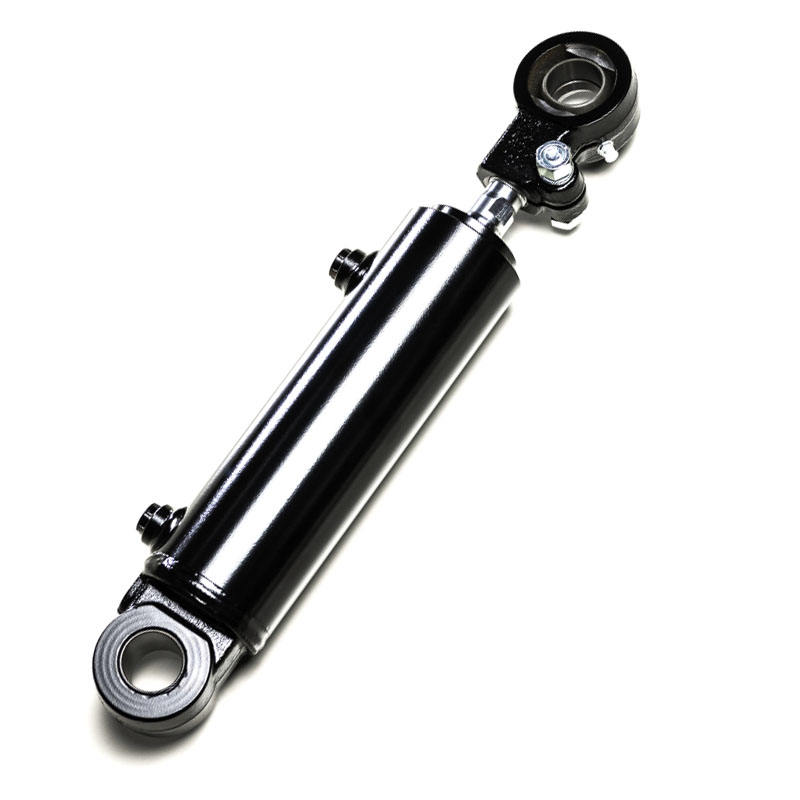
A pressure gauge at the lift cylinder port gives an even clearer picture. The gauge should hold steady at system pressure after the valve closes. A slow drop on the gauge while the mast height drops confirms internal bypass. For procurement staff, these diagnostics matter because they determine whether you should order a seal kit for a few dollars or replace the complete mast cylinder. Many fleets waste downtime by replacing seals in a barrel that is already scored or honed beyond tolerance. When you source a replacement hydraulic cylinder, ask for a supplier that tests each unit for internal leakage at 110% of rated pressure. That single requirement removes the most common cause of repeat failures.
Once the test points to the cylinder or valve, the buying decision becomes a balance between cost, downtime, and expected service life. A seal kit may cost less than 10% of a new mast cylinder, but it only works when the barrel, rod, and gland threads are still within tolerance. If the barrel has scoring, rust pitting, or out-of-round wear, new seals may fail within weeks. For older trucks with multiple leaking circuits, replacing the complete mast cylinder with a factory-tested unit often gives a longer service interval and lower total cost of ownership. The table below compares typical repair paths.
| Option | Best For | Typical Downtime | Service-Life Expectation |
|---|---|---|---|
| Seal kit replacement | Cylinder with smooth barrel and rod | 2–4 hours | 1–3 years with good maintenance |
| Honning and reseal | Minor bore damage, oversized seal available | 1–2 days | 2–4 years |
| Complete mast cylinder replacement | Scored barrel, repeated failures, critical operation | 3–6 hours | 5–8 years or longer |
| Control valve section rebuild | Drift traced to spool leakage | 2–3 hours | Varies with spool and bore wear |
Raydafon Technology Group Co.,Limited works with forklift fleets to match replacement mast cylinders to the original equipment specifications. Each cylinder is assembled with anti-wear piston seals, a chrome-plated rod where specified, and a load-hold check valve that holds rated pressure before shipment. This reduces the chance of installing a new cylinder that still drifts because the valve was not calibrated.
Procurement teams can prevent repeat drift failures by including a few acceptance criteria in RFQs. First, require the supplier to specify internal leakage at rated pressure, not only at atmospheric bench test. Second, ask for a hydraulic cylinder with a counterbalance or load-hold valve that is factory-set for the truck’s rated capacity. Third, verify material and surface finish: the rod should have a chrome layer of at least 20 µm and the barrel should be honed to a surface roughness of Ra 0.2–0.4 µm. These details directly affect whether new seals can hold pressure. Fourth, request a test report that shows each cylinder was cycled at 110% of rated pressure for a minimum cycle count. Sourcing from a supplier that also provides seal kits and technical support makes warranty claims easier. The table below lists key receiving checks for mast cylinders.
| Parameter | What to Check | Why It Matters |
|---|---|---|
| Rated working pressure | Matches forklift data plate or OEM manual | Prevents seal extrusion and drift |
| Load-hold valve crack pressure | Factory-set for the exact mast circuit | Holds load without jerky lowering |
| Bore surface finish | Ra 0.2–0.4 µm, no scoring | Extends seal life and reduces bypass |
| Rod chrome thickness | ≥20 µm, no pits or scratches | Prevents rod seal damage |
| Pressure test record | 110% rated pressure, no visible drop | Confirms no internal leakage before installation |
For companies that operate mixed forklift brands, Raydafon Technology Group Co.,Limited can consolidate sourcing for mast lift cylinders, tilt cylinders, and seal kits under one supply agreement. That simplifies the parts room and gives your maintenance team a consistent quality baseline across the fleet.
Q: Why does my forklift mast drift down when loaded even after replacing the hydraulic seals?
A: This usually means the internal leakage is not coming from the piston seal alone. The control valve spool may have excessive clearance, the load-hold check valve seat may be scored, or the cylinder barrel may be worn beyond the tolerance that new seals can seal against. In some cases, the new seal is cut during installation. Ask your supplier to test the complete cylinder and valve assembly at rated pressure before delivery. Raydafon Technology Group Co.,Limited includes a pressure-hold test on mast cylinders to catch these hidden leaks before they reach your dock.
Q: How much forklift mast drift is considered normal?
A: A forklift mast should not show visible downward movement during a normal load-hold test. Many OEM manuals specify a maximum drop over ten minutes with a rated load, but any drift that is fast enough to see while the operator is still in the seat indicates a leak. If you measure more than about 50 mm in ten minutes at rated load, schedule a pressure loss test immediately. Because each truck model has different bore and stroke volumes, compare the measured drop against the OEM service limit rather than a universal number. When purchasing replacement cylinders, ask for the factory’s internal leakage acceptance value in mL/min, not only a pass/fail statement.
If your fleet has already replaced seals once and the mast still drifts, stop guessing at the root cause. Work with a supplier that understands mast hydraulics from the barrel to the valve. Raydafon Technology Group Co.,Limited supplies forklift mast cylinders, tilt cylinders, seal kits, and load-hold valves for common lift truck models. Our team helps procurement and maintenance departments select the right replacement parts, confirm dimensional match, and reduce repeat drift failures with factory pressure testing. Visit https://www.raydafon.com to submit a parts inquiry, or email our sales office at [email protected] for a quote on hydraulic cylinder replacement programs.
1. Wang, X., et al. (2021). Internal Leakage Analysis of Hydraulic Cylinder Piston Seals Under Variable Load. Journal of Mechanical Engineering Science, 235(14), 2841–2853.
2. Zhang, L., & Chen, J. (2020). Fault Diagnosis of Forklift Load-Holding Valves Using Pressure Decay Testing. Journal of Hydraulic Research, 58(6), 902–913.
3. Liu, H., et al. (2019). Wear Characteristics of Piston Rod Seals in Construction Machinery Hydraulic Cylinders. Tribology International, 139, 55–64.
4. Kim, S., & Park, J. (2018). Experimental Study on Drift Rate of Double-Acting Hydraulic Cylinders in Mobile Equipment. International Journal of Precision Engineering and Manufacturing, 19(11), 1681–1687.
5. Müller, T., et al. (2022). Counterbalance Valve Stability in Loaded Forklift Mast Circuits. Control Engineering Practice, 125, 105198.
6. Sato, K., & Tanaka, Y. (2017). Effects of Hydraulic Oil Viscosity on Internal Leakage in Spool Valves. Journal of Fluid Power, 18(3), 221–230.
7. Rossi, A., et al. (2021). Honing Surface Roughness and Its Influence on Hydraulic Cylinder Seal Life. Surface Topography: Metrology and Properties, 9(2), 025020.
8. Johnson, M., & Lee, R. (2019). Predictive Maintenance for Forklift Hydraulic Systems Using Pressure Signature Analysis. Journal of Quality in Maintenance Engineering, 25(4), 518–531.
9. Chen, Y., et al. (2020). Load-Holding Performance of Pilot-Operated Check Valves Under Thermal Cycling. Proceedings of the Institution of Mechanical Engineers, Part I: Journal of Systems and Control Engineering, 234(8), 987–997.
10. Garcia, P., & Lopez, R. (2018). Seal Material Degradation in Hydraulic Cylinders Exposed to Zinc-Free Hydraulic Oils. Wear, 404–405, 194–202.
-