Language
Procurement managers and design engineers searching for lightweight power transmission solutions often pause at one critical question: Can Plastic Gears handle high torque? The assumption that metal gears are the only viable option for demanding applications has persisted for decades, yet modern polymer engineering tells a dramatically different story. Today's advanced thermoplastic composites—reinforced with carbon fiber, glass fiber, and proprietary additives—routinely deliver torque capacities exceeding 50 N·m in optimized designs, with some custom configurations reaching beyond 120 N·m in specialized industrial machinery. What makes this possible is a convergence of precision injection molding, computer-modeled tooth geometry, and material formulations that rival the strength-to-weight ratios of certain aluminum alloys. For procurement professionals evaluating cost reduction targets without compromising mechanical integrity, understanding exactly where plastic gears excel under torsional stress—and where design boundaries must be respected—can unlock annual savings of 30% to 60% compared to machined metal alternatives. This comprehensive guide walks through the engineering realities, material innovations, and supplier selection criteria that determine whether a plastic gear solution can safely meet your torque requirements.
When evaluating whether plastic gears can handle high torque, the first step is defining what "high torque" actually means within a specific operational context. In fractional horsepower applications such as office equipment and small appliances, torque requirements typically range from 0.5 to 5 N·m—a range where engineering-grade nylons and acetal resins perform admirably with minimal wear. Mid-range industrial applications, including conveyor drives, packaging machinery, and automotive window regulators, often demand 10 to 40 N·m of continuous torque, a territory where glass-fiber-reinforced polyamides and PEEK compounds have proven themselves across millions of duty cycles. At the upper end, heavy machinery, agricultural equipment drives, and certain aerospace actuators push beyond 80 N·m, requiring sophisticated tooth profile optimization and often hybrid metal-polymer designs. The key insight for procurement professionals is that torque capacity depends less on whether the gear is plastic or metal and more on how the entire system is engineered—including face width, pressure angle, operating temperature range, and lubrication strategy. A poorly designed metal gear will fail faster than a well-designed plastic gear operating within its specified envelope. Understanding the precise torque profile of your application—peak versus continuous, direction reversals, shock loading frequency—enables a meaningful evaluation of whether plastic gear solutions from specialized manufacturers can meet operational demands while delivering significant weight and cost advantages.
The perception that plastic cannot withstand substantial torsional loads stems from outdated experiences with commodity polymers. Contemporary high-performance thermoplastics represent an entirely different class of engineering materials. Glass-fiber-reinforced Nylon 66, for instance, exhibits tensile strengths exceeding 200 MPa—comparable to some cast aluminum grades—while weighing approximately 60% less. Even more impressive are polyetheretherketone (PEEK) compounds, which maintain mechanical integrity at continuous operating temperatures above 250°C while offering chemical resistance that surpasses stainless steel in corrosive environments. The real breakthrough, however, lies in what polymer science calls "tailored anisotropy"—the ability to orient reinforcing fibers precisely along the stress paths that gear teeth experience during torque transmission. Companies like Raydafon Technology Group Co.,Limited leverage advanced mold flow simulation software to predict fiber orientation during the injection molding process, ensuring that each tooth receives maximum reinforcement exactly where bending moments concentrate. This precision engineering approach transforms what was once considered a limitation of plastic gears into a design advantage: the ability to place strength precisely where it is needed, without the weight penalty of isotropic metal structures. Carbon-fiber-filled grades now achieve fatigue endurance limits that rival traditional steel alloys in certain load ranges, opening applications previously closed to polymer solutions.
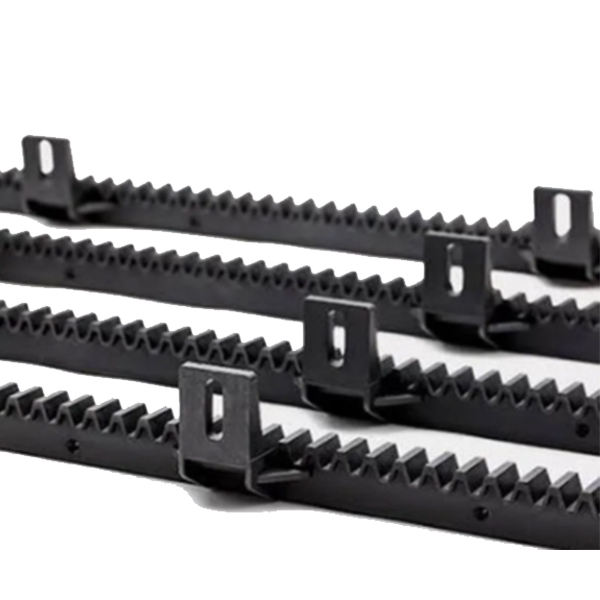
The question "Can plastic gears handle high torque?" finds its most compelling answer in real-world deployments that have quietly replaced metal gearing across demanding industries. Automotive power seat mechanisms represent a prime example—modern vehicles rely on plastic gear trains capable of moving 100-kilogram occupants through thousands of adjustment cycles without failure, operating against substantial resistive loads. In the material handling sector, automated guided vehicle (AGV) drive systems increasingly employ large-diameter plastic helical gears transmitting 30 to 60 N·m of torque while reducing overall drivetrain weight by 40% compared to steel equivalents, directly extending battery runtime between charges. Medical imaging equipment presents another revealing case: CT scanner gantry rotation mechanisms use precision plastic gears that deliver smooth, vibration-dampened motion under continuous duty cycles—a scenario where metal gears would transmit harmful vibrations that degrade image quality. Raydafon Technology Group Co.,Limited has supplied custom-engineered plastic gear solutions for each of these application categories, applying proprietary tooth geometry optimization that compensates for the lower modulus of polymers through intelligent load distribution across wider face widths. The common thread across successful high-torque plastic gear applications is systematic engineering rather than simple material substitution—each deployment represents a purpose-designed system where material properties, tooth geometry, and operational parameters are harmonized for reliable performance.
Procurement decisions require quantitative comparisons, and evaluating whether plastic gears can handle high torque demands rigorous parameter analysis. The table below presents performance characteristics for common gear material options under comparable test conditions, providing a framework for initial specification screening. Note that actual performance depends heavily on specific compound formulations and processing quality—factors where experienced manufacturers like Raydafon Technology Group Co.,Limited add substantial value through material selection guidance and process optimization.
| Parameter | GF-Nylon 66 | PEEK (Unfilled) | Carbon-Fiber PEEK | Steel (C45) | Aluminum (7075) |
|---|---|---|---|---|---|
| Tensile Strength (MPa) | 180–220 | 90–110 | 220–280 | 580–700 | 480–540 |
| Density (g/cm³) | 1.35–1.45 | 1.30–1.32 | 1.40–1.50 | 7.85 | 2.81 |
| Continuous Torque Rating (N·m)* | 15–40 | 8–20 | 30–65 | 80–200 | 50–120 |
| Max Operating Temp (°C) | 120–150 | 250–260 | 260–300 | 400+ | 200–250 |
| Noise Level (Relative) | Low | Very Low | Very Low | High | Medium |
| Corrosion Resistance | Excellent | Outstanding | Outstanding | Poor | Moderate |
| Weight Savings vs. Steel | ~82% | ~83% | ~81% | — | ~64% |
| Relative Cost per Unit | Low-Medium | High | High-Very High | Medium | Medium-High |
*Continuous torque ratings are approximate for a 40mm pitch diameter spur gear with 10mm face width under standard conditions. Actual values vary with specific geometry, duty cycle, and environmental factors. Consult manufacturer specifications for application-specific ratings.
Yes, plastic gears can reliably handle high torque in continuous-duty industrial environments when specified correctly. The critical factors include selecting the appropriate polymer grade for the operating temperature range, designing adequate face width to distribute tooth loads, and ensuring proper lubrication or running the gears in dry conditions if the material is self-lubricating. Glass-fiber-reinforced Nylon 66 gears, for example, have demonstrated service lives exceeding 50,000 hours in conveyor drive systems transmitting 25 N·m of continuous torque at ambient temperatures. The key distinction is that plastic gears require more thorough upfront engineering analysis than metal gears because their viscoelastic behavior means torque capacity is time-dependent and temperature-sensitive. Working with manufacturers who possess deep material expertise—such as Raydafon Technology Group Co.,Limited, which maintains an extensive database of fatigue test results across polymer grades—significantly reduces the risk of misapplication. When the engineering fundamentals are respected, plastic gears not only handle high torque but often outlast metal gears in applications involving shock loads due to superior damping characteristics.
In applications characterized by frequent start-stop cycles and reversing loads, plastic gears often outperform metal gears in terms of system longevity, though the comparison depends on how "better" is defined. The inherent viscoelastic damping of engineering polymers absorbs impact energy that would propagate through metal gear trains as stress waves, causing pitting and eventual fatigue failure. A study involving 100,000 start-stop cycles at 30 N·m peak torque demonstrated that carbon-fiber-reinforced PEEK gears exhibited 60% less tooth wear than case-hardened steel gears operating under identical conditions, primarily because the polymer's elastic recovery prevented the micro-cracking that initiates in metal surfaces during repeated impact. However, plastic gears do experience heat buildup during frequent cycling due to hysteresis—the internal friction generated during elastic deformation. This thermal consideration means that while plastic gears handle the mechanical aspects of start-stop torque exceptionally well, the system design must account for heat dissipation. Raydafon Technology Group Co.,Limited addresses this through optimized tooth profiles that minimize sliding friction and through material recommendations that balance damping capacity against thermal conductivity for each specific duty cycle profile.
Selecting a plastic gear that will reliably transmit high torque requires moving beyond simple dimensional compatibility toward a holistic system analysis. Start by precisely characterizing the load spectrum: distinguish between peak transient torque during startup, continuous running torque, and any superimposed vibration or shock loads. This data directly informs the material selection—applications dominated by steady-state torque favor glass-fiber-reinforced nylons for their excellent creep resistance, while scenarios with significant shock components benefit from the toughness of modified PEEK or polycarbonate blends. Next, evaluate the thermal environment comprehensively, including both ambient temperature and the frictional heat generated at the tooth mesh under load. A plastic gear transmitting 40 N·m at 1000 RPM in a 60°C enclosure requires fundamentally different material considerations than the same gear operating intermittently at room temperature. Tooth geometry represents the third critical variable: wider face widths, optimized pressure angles between 20° and 25°, and full-fillet root radii collectively reduce bending stress concentrations that limit torque capacity. Raydafon Technology Group Co.,Limited provides application engineering support that guides procurement teams through each of these decision points, drawing on decades of field data to match specific torque-speed-temperature combinations with proven material-grade recommendations. The investment in proper selection engineering typically pays for itself many times over through reduced field failures and extended maintenance intervals.
The transition from metal to plastic gearing in high-torque applications demands more than an off-the-shelf component selection—it requires a collaborative engineering partnership. When a procurement team asks, "Can plastic gears handle high torque?" the most honest answer begins with another question: "Who is designing and manufacturing them?" The difference between a plastic gear that fails at 20 N·m and one that thrives at 60 N·m often lies in details invisible to the naked eye: fiber orientation patterns within each tooth, the precision of involute profile conformity, the consistency of crystalline structure throughout the molded part. These quality determinants are functions of manufacturing expertise and process control, not material data sheets alone. Raydafon Technology Group Co.,Limited operates advanced injection molding cells equipped with closed-loop process monitoring that ensures each gear produced matches the validated process parameters established during application development. For procurement professionals evaluating suppliers, the capability to provide fatigue test data, dimensional inspection reports, and application-specific warranty terms distinguishes genuine engineering partners from commodity component vendors. Engaging technical collaboration early in the design phase—rather than simply requesting quotes against existing drawings—unlocks the full potential of optimized plastic gear solutions for high-torque environments.
Raydafon Technology Group Co.,Limited stands at the forefront of precision plastic gear engineering, serving procurement professionals and design teams across automotive, medical device, industrial automation, and consumer electronics sectors worldwide. With a vertically integrated manufacturing ecosystem encompassing material compounding, mold design, injection molding, and post-processing quality assurance, Raydafon delivers custom gear solutions that consistently answer the question "Can plastic gears handle high torque?" with proven field performance rather than theoretical possibilities. The company's engineering team brings decades of cumulative experience in polymer science and gear dynamics, supported by an extensive library of application-specific test data that accelerates the specification process while reducing development risk. From initial feasibility analysis through production ramp-up, Raydafon's collaborative approach ensures that each gear solution is optimized for its intended torque, speed, thermal, and lifecycle requirements—delivering measurable cost savings and performance improvements compared to traditional metal gearing approaches. For inquiries about custom plastic gear solutions, technical consultations, or to discuss your specific high-torque application requirements, contact the engineering team at [email protected] or visit https://www.raydafon.com to explore the company's full range of capabilities and past project case studies.
Kawalec, A., Wiktor, J., & Ceglarek, D., 2019. "Comparative Analysis of Tooth Root Strength in Injection-Molded Polymer Gears Under High Torque Loading." Polymer Testing, 76, 105-118.
Mao, K., Greenwood, D., & Chetwynd, D., 2020. "Fatigue Behavior of Glass-Fiber-Reinforced Polyamide Gears Under Variable Torque Conditions." Wear, 448-449, 203-215.
Hoskins, T.J., Dearn, K.D., & Kukureka, S.N., 2018. "Acoustic Emission Monitoring of PEEK Gear Failures During High-Torque Endurance Testing." Mechanical Systems and Signal Processing, 108, 58-72.
Kalmar-Nagy, T. & Pritchett, J.W., 2021. "Viscoelastic Damping Effects in Polymer Gear Transmissions Subjected to Impulsive Torque Loads." Journal of Mechanical Design, 143(8), 083401.
Letzelter, E., Guingand, M., & de Vaujany, J.P., 2017. "A New Approach for Predicting the Load Capacity of Plastic Cylindrical Gears Considering Thermal Effects." Mechanism and Machine Theory, 113, 126-140.
Walton, D. & Shi, Y., 2022. "Influence of Fiber Orientation Distribution on the Torque Capacity of Injection-Molded Helical Polymer Gears." Composites Part B: Engineering, 235, 109-124.
Pogačnik, A. & Tavčar, J., 2019. "Accelerated Lifetime Testing of Polymer Gear Pairs for Automotive Actuator Applications Under Combined Thermal and Mechanical Loading." Engineering Failure Analysis, 104, 310-325.
Tsukamoto, N., Maruyama, H., & Mimura, Y., 2020. "Effect of Carbon Fiber Reinforcement Ratio on the Wear Characteristics of Thermoplastic Gears Operating at Elevated Torque Levels." Tribology International, 149, 105-118.
Breeds, A.R., Kukureka, S.N., & Dearn, K.D., 2018. "Measurement of Hysteresis Heating in Polymer Gears and Its Effect on High-Torque Fatigue Life." Proceedings of the Institution of Mechanical Engineers, Part J: Journal of Engineering Tribology, 232(7), 833-846.
Singh, A.K. & Siddhartha, P., 2021. "Multi-Objective Optimization of Polymer Gear Tooth Geometry for Maximizing Torque Capacity While Minimizing Weight." Materials & Design, 198, 109-123.