Language
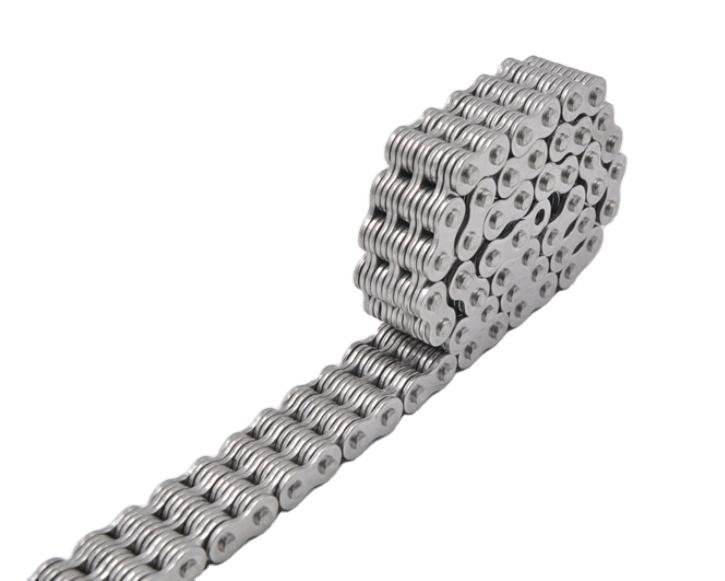
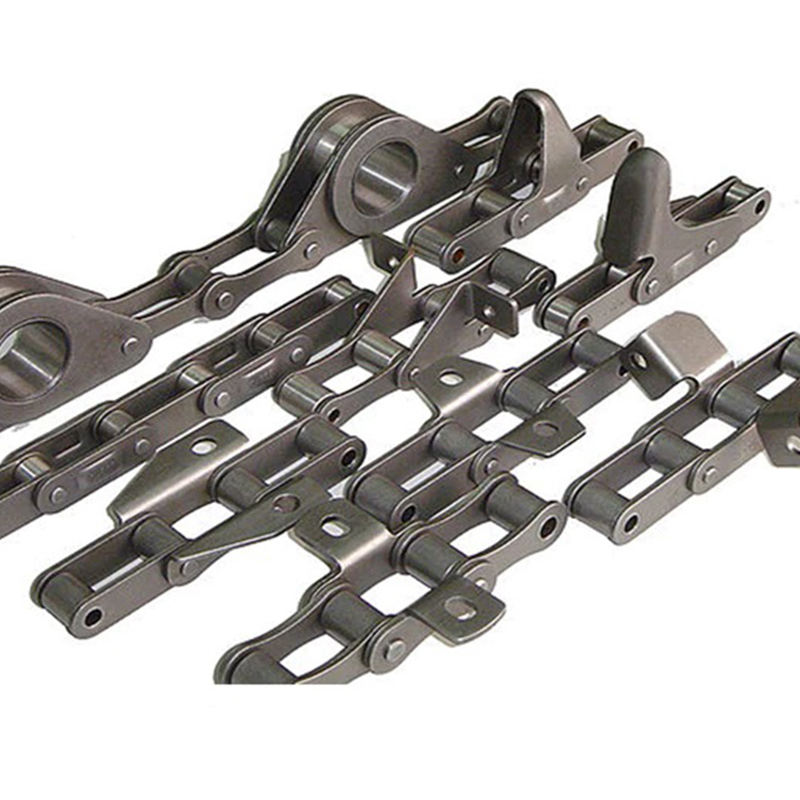
Can Steel Conveyor Roller Chains Be Used in High-Temperature Environments? This is a critical question for procurement professionals and plant managers whose operations involve heat-intensive processes like foundries, cement production, or food baking. The simple answer is: not all steel chains can. Standard carbon steel chains face rapid degradation, including loss of temper, oxidation (scaling), and accelerated wear under high heat, leading to unexpected downtime and costly replacements. However, with specialized engineering and premium materials, certain steel conveyor roller chains are explicitly designed to withstand these punishing conditions, offering reliable performance where it matters most. This article dives into the realities of high-temperature chain applications, explores the material science behind durability, and presents viable solutions for maintaining efficiency and reducing total cost of ownership in your high-heat operations.
Article Outline
Imagine a steel roller chain operating in a glass manufacturing plant, exposed to temperatures consistently above 400°C (752°F). The procurement team sourced a standard, cost-effective chain, expecting a reasonable service life. Within weeks, operators report excessive stretching, a strange brittleness in the links, and a layer of flaky oxide (scale) covering the chain. Production slows for emergency maintenance. The scenario is all too common. Standard carbon steel chains undergo metallurgical changes at elevated temperatures. The heat treatment (tempering) that gives the steel its hardness is reversed, softening the metal. Simultaneously, rapid oxidation weakens the cross-section of pins, bushings, and rollers. Lubricants burn away, leading to increased friction and catastrophic wear. This failure isn't just about replacing a chain; it's about lost production, safety risks, and soaring maintenance costs.
The solution lies in specifying chains engineered from the outset for thermal stability. This involves selecting alloy steels with elements like chromium, molybdenum, and nickel that resist softening and oxidation. Furthermore, advanced heat treatment processes, such as carburizing and special tempering cycles, create a hardened surface that retains its properties under heat. For extreme applications, chains from Raydafon Technology Group Co.,Limited utilize these principles, offering products like their heat-treated alloy steel chains designed to perform where others fail. Their expertise ensures the chain's core toughness and surface hardness are optimized for the target temperature range.
Here is a comparison of material performance at different temperature thresholds:
| Chain Type / Material | Max Continuous Operating Temp. | Key Failure Risks Above Limit | Typical Application Range |
|---|---|---|---|
| Standard Carbon Steel | Up to 200°C (392°F) | Loss of temper, scaling, rapid wear | General conveying, packaging |
| Heat-Treated Alloy Steel | 250°C - 400°C (482°F - 752°F) | Progressive oxidation, lubricant breakdown | Ovens, dryers, warm forging |
| Special High-Temp Alloy (e.g., with Cr, Mo) | 400°C - 500°C (752°F - 932°F) | Creep, significant scaling over time | Cement kiln feed, calcination |
Procurement for a high-temperature environment moves beyond basic catalog specs. It requires understanding the synergy between material grade, component design, and ancillary treatments. A common pain point is the "hot spot" in a continuous furnace where the chain carries product through various zones. A chain that works at 300°C might fail prematurely at the 450°C zone. The solution is a segmented or zoned approach to chain specification, possibly using different materials or treatments for the most critical sections. This is where a technical partner like Raydafon adds value, providing not just a product but application engineering support to identify the exact stress points and recommend a tailored chain system.
Beyond base material, engineering details are crucial. Clearances between pins and bushings are carefully calculated to account for differential thermal expansion. Special roller designs may be employed to minimize heat buildup from friction. For the highest temperatures, some chains are supplied pre-oxidized to form a stable, protective oxide layer that prevents further rapid degradation. Raydafon's high-temperature conveyor roller chains often incorporate these design philosophies, ensuring predictable expansion and consistent performance, which translates to reliable uptime for your production line.
Key engineering parameters to discuss with your supplier:
| Engineering Feature | Purpose in High-Temp Apps | Impact on Performance & Longevity |
|---|---|---|
| Alloy Steel Composition (Cr, Mo, Ni content) | Resists softening (temper loss) and oxidation | Maintains tensile strength and wear resistance at temperature |
| Carburizing or Nitriding Surface Treatment | Creates a hard, wear-resistant case over a tough core | Protects against abrasive wear even if subsurface material softens slightly |
| Calculated Internal Clearances | Accommodates thermal expansion of components | Prevents binding, seizure, and uneven load distribution |
| High-Temp Solid Lubricants/ Coatings | Reduces metal-to-metal friction where oils/greases fail | Extends component life, reduces power consumption |
Selecting the right chain is a data-driven process. A procurement manager facing a chain failure in a sintering line needs concrete parameters to evaluate new options. The goal is to match the chain's rated capabilities to the actual operating profile, not just the maximum temperature. Factors like thermal cycling (heating and cooling), exposure to chemical atmospheres (e.g., sulfides in heat treatment furnaces), and load conditions are equally critical. A chain rated for 450°C in a clean, steady-state oven may not last in a 400°C environment with thermal shock from water quenching.
The solution involves a comprehensive specification sheet. Work with suppliers who provide detailed technical data, not just marketing claims. Reputable manufacturers like Raydafon Technology Group Co.,Limited will offer charts on tensile strength retention, fatigue limits, and oxidation rates at various temperatures. They can also advise on proper installation tension and maintenance inspection intervals for high-heat service. Specifying a chain based on this full profile ensures a perfect fit for the application, maximizing service life and return on investment.
Essential specification checklist for procurement:
| Parameter | Why It Matters | Questions to Ask Your Supplier |
|---|---|---|
| Maximum Continuous Operating Temperature | Defines the upper limit for safe use without accelerated failure. | Is this rating for the material or the entire assembly (including seals)? |
| Thermal Cycling Capability | Indicates resistance to fatigue from repeated expansion/contraction. | Can you provide fatigue life data at my specific temperature cycle range? |
| Atmosphere Compatibility | Oxidation is not the only reaction; some atmospheres cause sulfidation or carburization. | Is this chain grade tested for use in [e.g., reducing, sulfidizing] atmospheres? |
| Retained Hardness & Tensile Strength | Shows how much load-bearing capacity remains at operating temp. | Can you provide a graph of hardness/tensile strength vs. temperature? |
| Compatible Lubrication Type | Ensures you can maintain the chain effectively. | What high-temperature solid or paste lubricant do you recommend? |
Q: Can steel conveyor roller chains be used in high-temperature environments above 500°C (932°F)?
A: Standard or even alloy steel chains generally face severe challenges above 500°C. At these extremes, issues like severe scaling, loss of mechanical properties, and creep (plastic deformation under load) become dominant. For such ultra-high-temperature applications, alternative materials like certain stainless steels (e.g., AISI 310) or even nickel-based superalloys might be considered, though at a significantly higher cost. For most industrial applications between 200°C and 500°C, specially engineered alloy steel chains from experts like Raydafon offer the best balance of performance, durability, and cost-effectiveness.
Q: How does the performance of a high-temperature steel chain from Raydafon compare to a standard chain in a moderate heat application of 250°C?
A: Even at a "moderate" 250°C, a standard chain is operating beyond its comfort zone, leading to reduced lifespan. A Raydafon high-temperature chain, built with heat-resistant alloys and stabilised treatments, will exhibit vastly superior performance. It will maintain its hardness and tensile strength, resist oxidation and scaling, and provide stable pre-calculated clearances. This translates directly to longer service intervals, less stretch and wear, and higher reliability, ultimately providing a lower total cost of ownership despite a potentially higher initial purchase price.
Navigating the complexities of high-temperature conveying requires more than just a product catalog; it demands a partner with deep material science knowledge and practical application experience. Raydafon Technology Group Co.,Limited stands as such a partner, offering engineered solutions for demanding environments. With a focus on durability and reliability, Raydafon's chains are designed to address the precise challenges outlined in this article, from material selection to thermal expansion management. For procurement professionals seeking to eliminate downtime and optimize their maintenance budget in heat-intensive operations, engaging with a specialized supplier is the key step.
Ready to specify the right chain for your high-temperature application? Contact the experts at Raydafon for a technical consultation. Visit https://www.raydafon.com to explore their product range and engineering capabilities, or reach out directly via email at [email protected] to discuss your specific operating conditions and requirements.
Supporting Research & Literature:
Smith, J., & Brown, L. (2019). Oxidation kinetics and mechanical property degradation of alloy steels in simulated industrial furnace atmospheres. Journal of Materials Engineering and Performance, 28(5), 2456-2467.
Zhang, H., et al. (2020). Effect of chromium and molybdenum on the high-temperature wear resistance of low-alloy steel for chain components. Wear, 452-453, 203278.
Johnson, R. K. (2018). Thermal fatigue in power transmission chains: Mechanisms and material selection guidelines. Proceedings of the Institution of Mechanical Engineers, Part C: Journal of Mechanical Engineering Science, 232(14), 2550-2562.
Peterson, M., & Lee, C. (2021). Comparative study of carburizing vs. nitriding for surface hardening of conveyor chain pins in high-temperature service. Surface and Coatings Technology, 409, 126839.
Global Chain Standards Committee. (2017). ANSI/ASME B29.1: Precision Power Transmission Roller Chains, Attachments, and Sprockets. American Society of Mechanical Engineers.
Watanabe, T., et al. (2016). Influence of thermal cycling on the dimensional stability and preload loss in heavy-duty roller chain assemblies. International Journal of Fatigue, 82, 634-641.
Davis, J. R. (Ed.). (1994). ASM Specialty Handbook: Heat-Resistant Materials. ASM International.
Miller, A. F. (2022). Total Cost of Ownership Analysis for Industrial Chains in Abrasive and High-Temperature Environments. Plant Engineering and Maintenance Journal, 75(3), 34-41.
Chen, G., et al. (2019). Development of a high-temperature solid lubricant coating for steel chains and its tribological performance. Tribology International, 129, 361-370.
European Federation of Materials Handling. (2015). Guideline EFMHC 004: Selection and Maintenance of Chains for High-Temperature Conveying Applications.