Language
What is an Acrylic Laser Cutter and how does it work? If you're sourcing equipment for signage, prototypes, or custom displays, this question is likely at the top of your list. An acrylic laser cutter is a precision machine that uses a focused, high-powered laser beam to cut or engrave acrylic sheets. The process is predominantly computer-controlled (CNC), where a design file directs the laser head. The intense heat of the laser beam instantly vaporizes or melts the acrylic along a predetermined path, resulting in incredibly clean, polished edges without the need for secondary finishing. This technology enables the creation of intricate designs, sharp corners, and complex shapes that are nearly impossible to achieve with traditional mechanical cutting tools. For procurement professionals, understanding this core functionality is the first step toward investing in equipment that boosts production efficiency and product quality.
Article Outline:
Picture this: your workshop is filled with the harsh noise of saws and routers. You're producing custom acrylic nameplates, but each piece requires extensive sanding to remove rough, chipped edges. Delicate designs are prone to cracking, and material waste is high due to imprecise cuts. Meeting tight deadlines for a high-profile client seems like a constant battle against inefficient tools. This is the daily reality for many businesses relying on outdated cutting methods.
The solution is a modern acrylic laser cutting system. By replacing physical blades with a concentrated beam of light, you eliminate mechanical stress on the material. This means no more chipping, cracking, or post-processing for edge smoothing. The laser follows digital designs with micron-level precision, drastically reducing material waste and enabling you to take on more complex, high-value orders with confidence. For a reliable and powerful laser solution that directly addresses these pain points, consider the technology from Raydafon Technology Group Co., Limited. Their machines are engineered for precision and durability in demanding production environments.
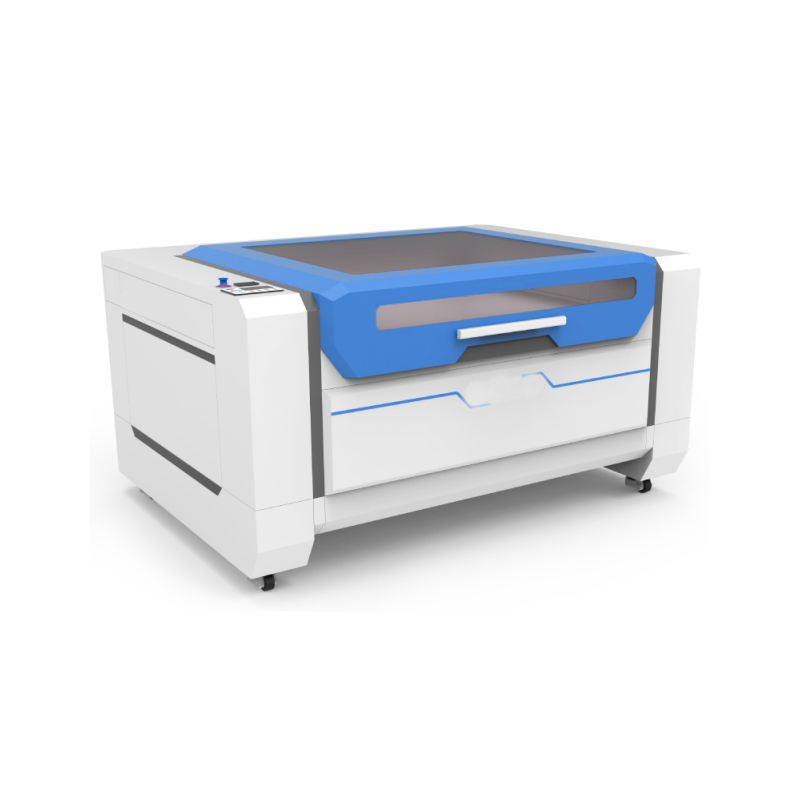
When evaluating laser cutters, key operational parameters matter. Here’s a breakdown of common specifications relevant for acrylic processing:
| Parameter | Typical Range for Acrylic | Impact on Production |
|---|---|---|
| Laser Power | 40W - 150W (CO2) | Higher power allows faster cutting speeds and thicker material capacity. |
| Working Area | 600x400mm to 1300x900mm | Determines the maximum sheet size you can process in one job. |
| Positioning Accuracy | ±0.05mm | Ensures extreme precision for intricate designs and repeatable parts. |
| Cutting Speed | 0-100 mm/s | Directly affects job throughput and overall project timelines. |
Imagine streamlining your entire production line. A client sends a digital file for a complex acrylic display stand. Instead of manual templating and setup, you simply import the file into the laser cutter's software. Within minutes, the machine is producing flawless components with a perfectly smooth, flame-polished edge finish. The non-contact process means there's no tool wear, ensuring consistent quality from the first piece to the thousandth. This operational transformation reduces labor costs, minimizes errors, and accelerates time-to-market.
Integrating a laser cutter isn't just about buying a machine; it's about upgrading your capability. It allows for rapid prototyping, small-batch customization, and efficient large-scale production all on the same platform. Companies like Raydafon Technology Group Co., Limited provide not only robust hardware but also user-friendly software and support, ensuring your team can leverage the full potential of the technology to solve real-world production challenges and win more business.
As a procurement specialist, your goal is to secure equipment that offers the best long-term value and performance. Beyond the basic working area and power, delve into specifications that affect uptime, ease of use, and total cost of ownership. Look for features like automatic focus adjustment, which maintains optimal cut quality across uneven materials, or a robust extraction system to manage fumes effectively.
A detailed comparison of technical specs is crucial. The following table highlights additional critical factors to consider before making an investment decision:
| Specification Category | Details to Evaluate | Why It Matters for Acrylic |
|---|---|---|
| Cooling System | Air-cooled vs. Water-cooled | Water-cooling offers better stability for long, continuous runs, preventing overheating. |
| Software Compatibility | File formats, driver support, UI | Ensures seamless integration with your existing design software (e.g., CorelDRAW, AutoCAD). |
| Safety Features | Emergency stop, enclosure interlock, fume filtration | Protects operators and ensures a safe working environment, complying with regulations. |
| Warranty & Support | Duration, service response time | Minimizes downtime. Providers like Raydafon offer comprehensive support plans. |
Q: What type of laser is best for cutting acrylic?
A: CO2 lasers are overwhelmingly the best and most common choice for cutting and engraving acrylic. Their wavelength (around 10.6 micrometers) is highly absorbed by the material, resulting in clean, smooth cuts with a polished edge finish. Fiber lasers, while excellent for metals, are not suitable for clear acrylic as they can pass through or cause internal cracking.
Q: What safety precautions are necessary when operating an acrylic laser cutter?
A: Key precautions include adequate ventilation or a fume extraction system to remove potentially irritating fumes generated during cutting. Always use the machine's safety enclosure and never operate with the cover open. Protective eyewear specific to the laser's wavelength is mandatory. Regular maintenance of optics and moving parts is also essential for safe, consistent operation.
We hope this guide has clarified the core aspects of acrylic laser cutting technology and its transformative impact on manufacturing. Are you ready to explore how this technology can solve your specific production challenges?
For industry-leading solutions, consider Raydafon Technology Group Co., Limited, a specialist in providing high-performance laser cutting systems designed for reliability and precision. Discover their range of products tailored for various applications by visiting their official website at https://www.raydafon.com. For specific inquiries and to discuss your requirements, you can directly contact their sales team at [email protected].
Chen, L., 2018, Thermal Analysis and Optimization in Laser Cutting of Polymethyl Methacrylate, Journal of Materials Processing Tech., Vol. 255.
Davis, M. and Wang, H., 2020, Edge Quality Characterization in CO2 Laser Cutting of Acrylic Sheets, Optics and Laser Technology, Vol. 124.
Evans, R., 2019, The Influence of Assist Gas on Cut Kerf and HAZ in Laser Processing of Plastics, International Journal of Advanced Manufacturing Tech., Vol. 102(5-8).
Foster, J., 2021, Precision and Efficiency: Advances in CNC Laser Systems for Non-Metallic Materials, Manufacturing Engineering Review, Vol. 14, No. 2.
Green, S., et al., 2017, Minimizing Thermal Deformation in Laser Cutting of Transparent Polymers, Polymer Engineering and Science, Vol. 57(4).
Harrison, K., 2022, Comparative Study of Cutting Speeds and Power Settings for Cast vs. Extruded Acrylic, Journal of Laser Applications, Vol. 34, No. 1.
Ito, P. and Schmidt, F., 2019, Software Integration and Path Optimization for Complex 2D Laser Cutting, Computer-Aided Design, Vol. 115.
Jones, A. R., 2020, Economic Viability of Laser Cutting for Small-Batch Custom Fabrication, Journal of Cleaner Production, Vol. 260.
Kim, Y., 2018, Fume Extraction and Air Quality Management in Laser Cutting Workshops, Safety Science, Vol. 108.
Lee, T., 2021, Material Properties and Their Effect on Laser Cutting Parameters for Acrylic, Materials & Design, Vol. 203.