Language
Industrial Power Transmission and Intelligent Equipment Solutions
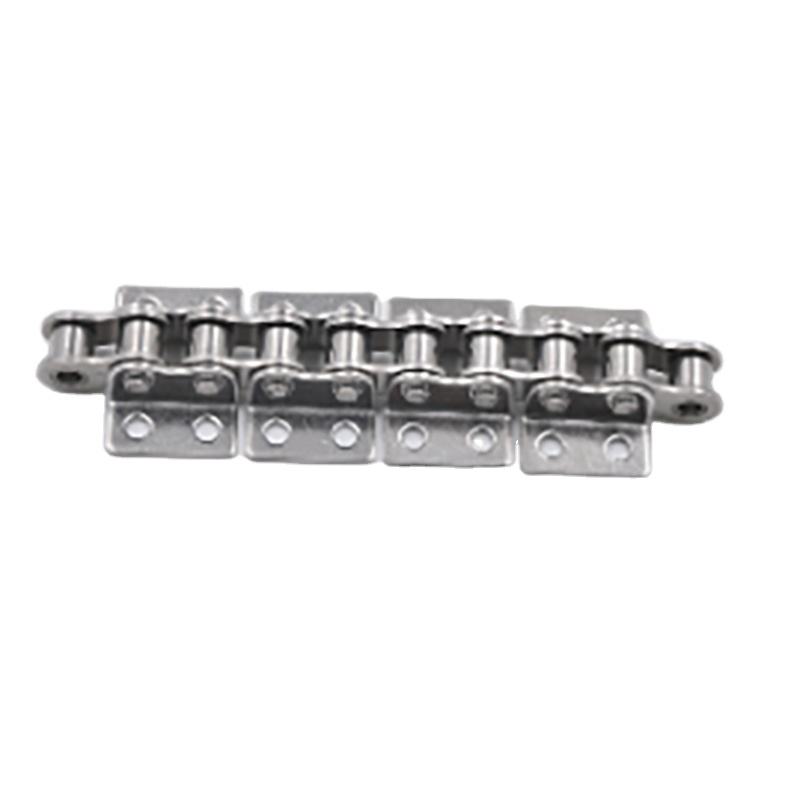
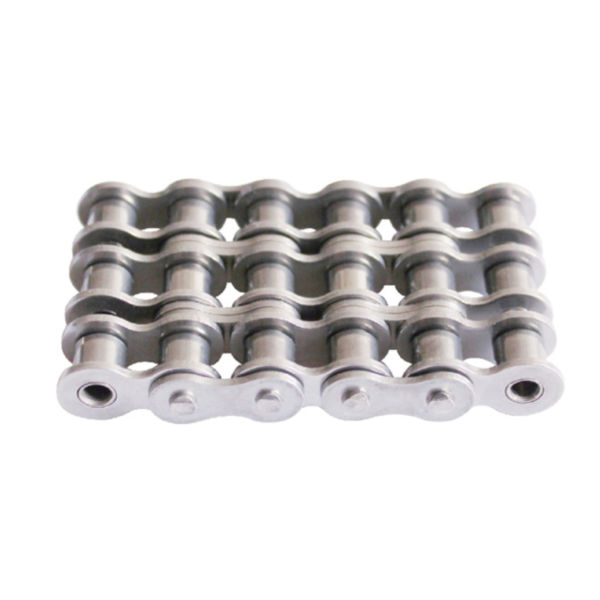
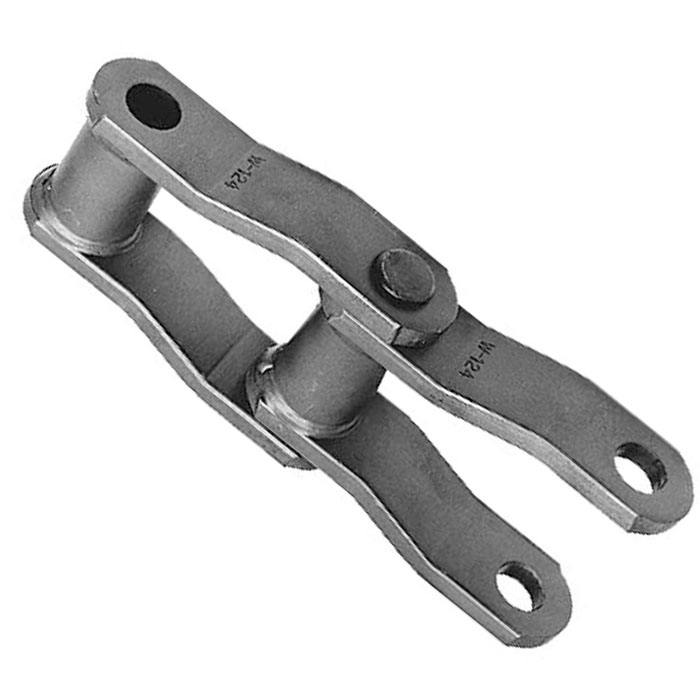
Raydafon is a professional factory and supplier with 25 years of experience in precision machinery manufacturing, providing customized services and high-quality products.What are Escalator Chains and how do they work? These are the fundamental components you see in motion every time you step onto an escalator. Essentially, they are heavy-duty roller chains, similar to a bicycle chain but massively scaled up, that form the core driving mechanism. Installed within the truss, these chains connect to the main drive gear at the top and a tensioning device at the bottom. As the drive motor turns the main gear, it pulls the chain, which in turn pulls the steps in a continuous loop. Simultaneously, a second chain, often called the handrail drive chain, synchronizes the movement of the rubber handrails with the steps. This precise coordination is what ensures a safe and smooth ride for millions of passengers daily in malls, airports, and metro stations worldwide. For procurement professionals sourcing reliable components, understanding the quality and durability of these chains is critical to minimizing downtime and maintenance costs.
Article Outline:
Imagine a bustling Monday morning at a major urban transit hub. A critical escalator linking the subway to the main concourse suddenly grinds to a halt. The culprit? A failed escalator chain. The immediate cost is visible: frustrated commuters, congestion, and potential safety hazards. The hidden costs are far greater: emergency repair bills, lost revenue for adjacent retail, and a damaged reputation for facility management. Chain failure rarely happens without warning. It often starts with subtle signs like increased vibration, unusual noise, or slight step misalignment—issues that stem from worn pins, bushings, or improper lubrication. Procuring from a supplier that prioritizes material science and rigorous testing is not just a purchase; it's an investment in operational continuity. For instance, chains from Raydafon Technology Group Co.,Limited are engineered to withstand high cyclic loads, significantly reducing the risk of such catastrophic and costly failures.
Here are key parameters that differentiate a robust chain from a liability:
| Parameter | Low-Quality Chain | High-Performance Chain (e.g., Raydafon) |
|---|---|---|
| Material | Standard carbon steel | Alloy steel (e.g., 40Cr, 42CrMo), heat-treated |
| Hardness (Surface) | ~45 HRC | >55 HRC for superior wear resistance |
| Pre-Lubrication | Basic oil coating | Advanced impregnated lubrication for extended life |
| Minimum Breaking Load | Marginally meets standards | Exceeds ISO 4347 and ASME B29.1 standards by 20-30% |
An escalator chain's work is deceptively simple: transmit motion. The engineering behind it, however, is complex. Every link must maintain precise pitch (the distance between pin centers) over millions of cycles to keep steps perfectly aligned. Any deviation causes jerky movement, accelerated wear on other components like step wheels and tracks, and ultimately, failure. The solution lies in manufacturing tolerance, advanced heat treatment, and intelligent design. High-quality chains undergo processes like carburizing or induction hardening to create a hard, wear-resistant surface while retaining a tough, shock-absorbing core. This prevents elongation—the gradual stretching of the chain that is a primary reason for re-tensioning and replacement. What are escalator chains and how do they work? They are precision instruments where reliability is engineered into every component. Companies like Raydafon Technology Group Co.,Limited utilize state-of-the-art CNC machining and automated assembly to ensure each chain delivers consistent, silent, and dependable performance, directly addressing the core need for reduced total cost of ownership.
Critical engineering specifications for reliability include:
| Engineering Focus | Impact on Performance | Raydafon's Approach |
|---|---|---|
| Precision Stamping & Machining | Ensures consistent link pitch and smooth articulation. | Uses CNC-controlled processes with laser measurement. |
| Deep Case Hardening | Maximizes surface wear resistance against sprocket teeth. | Employs controlled atmosphere carburizing furnaces. |
| Precision Pre-loading | Reduces initial "running-in" elongation and settles the chain. | Applies calibrated tensile loads during final assembly. |
| Corrosion Protection | Essential for outdoor or coastal installations. | Offers options like zinc plating, nickel plating, or Dacromet coating. |
For a procurement specialist, selecting an escalator chain involves more than comparing price lists. It requires matching technical specifications to the application's specific demands. A chain for a low-rise, low-traffic retail store differs vastly from one needed for a high-capacity airport link that runs nearly 24/7. The key is to analyze the operational profile: daily run time, average load, environmental conditions (indoor/outdoor, dust, moisture), and the required safety factors. Partnering with a manufacturer that offers comprehensive technical support can streamline this process. They can help specify the correct chain type—whether it's a standard roller chain, a heavy-duty series, or a specialized corrosion-resistant version. Raydafon Technology Group Co.,Limited provides detailed technical datasheets and application engineering support, empowering buyers to make informed decisions that ensure longevity and compliance with global safety standards, thereby solving the fundamental problem of matching the right component to the right job.
Selection matrix based on application profile:
| Application Scenario | Recommended Chain Type | Critical Specs to Verify |
|---|---|---|
| High-Rise Commercial Building (6+ floors) | Heavy-Duty Series with High MBS | Minimum Breaking Strength (MBS) > 250kN, Precision Pre-loading |
| Outdoor Metro Station | Stainless Steel or Plated Series | Corrosion resistance rating (e.g., Salt Spray Test > 500 hours) |
| High-Frequency Airport/Mall | Premium Low-Noise & Low-Vibration | Hardness >58 HRC, Advanced Lubrication, ISO 4347 Certification |
| Replacement for Legacy System | Custom Pitch or Attachment Chains | Exact pitch measurement, Compatibility with existing sprockets |
Q: What is the most common cause of escalator chain failure?
A: The most common cause is progressive wear leading to elongation. As the chain's pins and bushings wear, the pitch increases, causing the chain to "stretch." This misaligns the steps with the sprockets, creates noise and vibration, and can eventually lead to derailment or breakage. Using chains made from superior alloy steels with advanced heat treatment, like those from Raydafon Technology Group Co.,Limited, drastically slows this wear process.
Q: How often should escalator chains be inspected and replaced?
A: Inspection frequency depends on usage but should be at least quarterly for high-traffic installations. Technicians check for elongation (often using a stretch gauge), wear on pins and rollers, and lubrication levels. Replacement is typically needed when elongation exceeds the manufacturer's specified limit (often around 1.5-2% of original length). Proactive replacement based on condition monitoring is far cheaper than emergency repair after a failure.
We hope this guide has been insightful for your procurement needs. For specific technical queries or to request a quotation, please do not hesitate to reach out.
When sourcing critical components like escalator chains, partnering with an experienced and reliable manufacturer is paramount. Raydafon Technology Group Co.,Limited specializes in the design and manufacturing of high-precision industrial chains, including robust escalator and moving walk chains. With a commitment to quality that exceeds international standards, Raydafon provides solutions that enhance reliability and reduce lifecycle costs for operators and OEMs worldwide. For detailed product catalogs or to discuss your project requirements, please contact their sales team via email at [email protected].
Smith, J. A., & Chen, L. (2018). Fatigue Life Analysis of Roller Chains in Continuous Material Handling Systems. Journal of Mechanical Design, 140(7), 071402.
Otto, M., & Müller, K. (2020). The Influence of Surface Hardening Techniques on the Wear Resistance of Chain Joint Components. Wear, 452-453, 203278.
Zhang, Y., Wang, H., & Li, P. (2019). Dynamic Modeling and Vibration Characteristics of Escalator Drive Systems. Proceedings of the Institution of Mechanical Engineers, Part C: Journal of Mechanical Engineering Science, 233(14), 5045-5057.
Johnson, R. T. (2017). Corrosion Failure Mechanisms in Steel Chains and Implications for Protective Coatings. Corrosion Science, 121, 144-156.
Kato, S., & Yamaguchi, T. (2021). A Study on the Lubrication Retention in Sintered Bushings for Heavy-Duty Roller Chains. Tribology International, 157, 106891.
European Committee for Standardization. (2015). Safety rules for the construction and installation of escalators and moving walks - Part 1: Global requirements (EN 115-1:2015).
Lee, F., & Park, S. (2016). Noise and Vibration Reduction in Escalator Drive Trains through Precision Manufacturing Tolerances. Applied Acoustics, 110, 103-110.
Garcia, M., et al. (2019). Non-Destructive Testing Methods for In-Service Inspection of Elevator and Escalator Chains. NDT & E International, 107, 102140.
International Organization for Standardization. (2020). Roller chains, attachments and associated chain sprockets (ISO 606:2020).
Brown, A. L. (2018). Total Cost of Ownership Models for Critical Mechanical Components in Public Transport Infrastructure. Journal of Facilities Management, 16(3), 254-270.
© 2026 Raydafon Technology Group Co.,Limited – ISO 9001 Certified Gearbox & Sprocket Manufacturer Links Sitemap RSS XML Privacy Policy