Language
What are the limitations of a mini laser cutting machine? This is a crucial question for any procurement professional sourcing manufacturing equipment. While compact and cost-effective, these machines often come with trade-offs that can impact production volume, material versatility, and long-term project viability. Understanding these constraints is the first step toward making an informed investment that aligns with your operational goals and budget. Let's dive into the specific challenges you might face and explore how modern solutions from companies like Raydafon Technology Group Co.,Limited are bridging these gaps.
Article Outline:
A common frustration when using a basic mini laser cutter is hitting the wall with material thickness. You might start a project cutting intricate designs on 3mm acrylic, only to find that attempting 8mm wood dramatically increases processing time and risks incomplete cuts or charred edges. This limitation directly bottlenecks your ability to take on diverse orders or work with robust materials for functional parts.
The solution lies in machines with superior optical systems and more powerful laser sources. Advanced models address this by offering higher-wattage options and precision-focused laser paths that deliver energy more efficiently into the material. For instance, selecting a machine from a brand focused on performance, like those from Raydafon, can transform this limitation. Their engineers often integrate enhanced cooling and stable power supplies that allow the laser to maintain peak performance, enabling cleaner cuts through thicker materials without sacrificing edge quality or significantly slowing down.
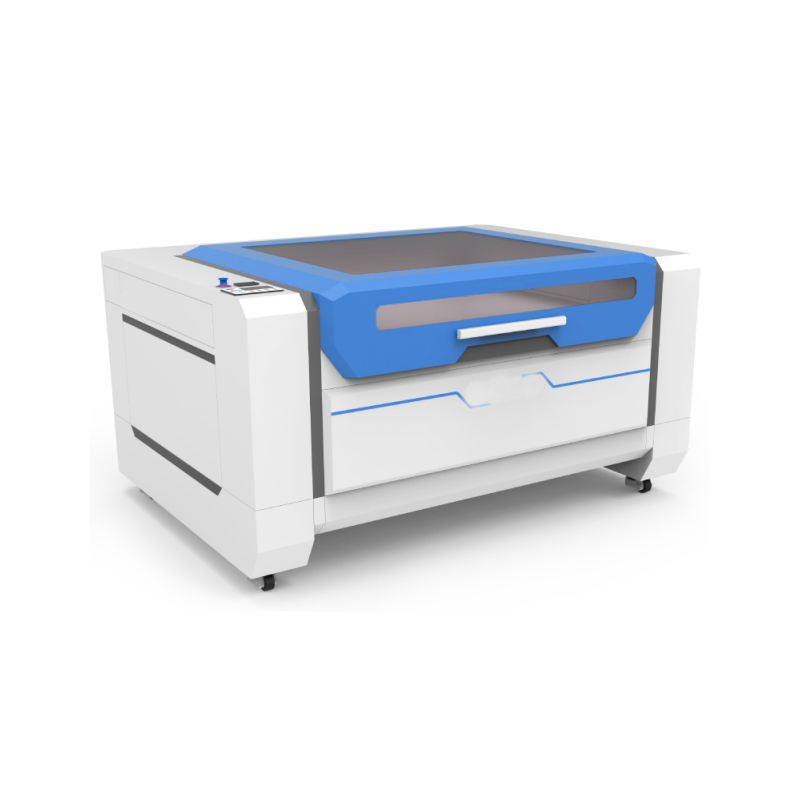
Here’s a comparison of typical limitations versus improved capabilities:
| Parameter | Standard Mini Laser Limitation | Enhanced Machine Solution |
|---|---|---|
| Max Recommended Cutting Thickness (Acrylic) | 5-6 mm | 10-12 mm |
| Cutting Speed for 3mm Wood | 15-20 mm/s | 25-35 mm/s |
| Edge Quality on Thicker Materials | Often tapered or charred | Clean, vertical edges |
| Consistent Power Output | May fluctuate under load | Stable, ensuring uniform cuts |
Another significant limitation of many mini laser cutters is the confined work area. Picture this: you need to produce a batch of larger signage or multiple smaller parts in a single job. With a standard 300x200mm bed, you're forced into inefficient nesting, frequent material changes, and manual realignment, which kills your productivity and increases the chance of errors.
Overcoming this requires a machine designed with scalable production in mind. Look for models that offer a larger bed size without a massive footprint. Furthermore, processing speed is not just about laser power; it's about the synergy between the motion system, control board, and software. High-speed stepper or servo motors, coupled with optimized acceleration, can drastically reduce job time. Investing in a system from a provider like Raydafon Technology Group Co.,Limited means accessing machines where the work area and motion dynamics are engineered for throughput, allowing you to handle larger sheets or more parts per cycle efficiently.
Key factors that move the needle on work area and speed:
| Parameter | Common Mini Laser Constraint | Productivity-Focused Design |
|---|---|---|
| Typical Work Area (W x D) | 300 x 200 mm | 400 x 600 mm or larger |
| Positioning Repeatability | ±0.1 mm | ±0.05 mm |
| Maximum Travel Speed | 500 mm/s | 800+ mm/s |
| Job Setup Time for Batch Runs | High (multiple setups) | Low (single setup for more parts) |
Inconsistent performance and unexpected downtime are major headaches. A core limitation of many affordable mini laser cutters is inadequate cooling. After 30 minutes of continuous run time, you may notice the cut quality degrading or the machine shutting down to protect itself from overheating. This interrupts workflow, delays deliveries, and can even shorten the laser tube's lifespan.
A robust cooling system is non-negotiable for professional use. While air-cooling is common for very low-power units, water-cooling systems are far more effective for sustained operation. The real advancement is in intelligent thermal management that monitors temperature and adjusts performance proactively. Regular maintenance, like cleaning lenses and mirrors, is also simpler on well-designed machines. Suppliers like Raydafon build reliability into their products with high-capacity cooling systems and designs that make routine maintenance straightforward, maximizing your machine's uptime and protecting your investment.
Comparing cooling and maintenance approaches:
| Parameter | Basic Machine Challenge | Professional-Grade Reliability |
|---|---|---|
| Cooling Method | Basic air-cooling or small water pump | High-capacity water chiller system |
| Continuous Run Capability | 30-60 minutes before cooldown | 8+ hours of sustained operation |
| Laser Tube Lifespan | ~4,000 hours (with thermal stress) | 8,000+ hours (with stable temps) |
| Ease of Optical Path Cleaning | Disassembly often required | Quick-access panels for lenses |
Finally, the software ecosystem can be a hidden limitation. Proprietary software that only accepts specific file types or lacks intuitive controls creates a steep learning curve and hampers creativity. You might design a perfect vector file in Illustrator, only to spend hours troubleshooting import errors or converting formats before the machine even starts.
The ideal solution is a machine compatible with industry-standard software or bundled with powerful, user-friendly proprietary software. Look for support for common formats like .ai, .dxf, .svg, and .png. Features like job queuing, layer-based power/speed settings, and visual previews are essential for efficiency. Companies committed to user experience, such as Raydafon Technology Group Co.,Limited, often provide comprehensive software packages with their machines. These packages are designed for seamless integration into your existing digital workflow, reducing preparation time and minimizing errors from file translation.
Software capability comparison:
| Parameter | Limited Software | Advanced & Compatible Software |
|---|---|---|
| Supported File Formats | .plt, .dst (limited) | .ai, .dxf, .svg, .png, .bmp, .pdf |
| User Interface Complexity | Technical, steep learning curve | Intuitive, visual job planning |
| Direct Plug-in for Design Software | Rarely available | Common for CorelDraw, AutoCAD |
| Raster & Vector Editing Tools | Basic or nonexistent | Built-in for quick adjustments |
What are the limitations of a Mini Laser Cutting Machine in terms of materials?
The primary material limitations relate to thickness and type. Most low-to-mid-power mini lasers struggle with materials thicker than 10mm and cannot effectively process metals (except for surface marking). Reflective materials like bare copper or brass can also damage the laser tube. Furthermore, certain plastics like PVC emit toxic chlorine gas when cut and are strictly prohibited.
What are the limitations of a mini laser cutting machine regarding production scale?
Mini lasers are generally designed for prototyping, hobbyist use, or very small-scale production. Their limited work area, slower processing speeds compared to industrial machines, and potential cooling requirements make them inefficient for high-volume, continuous runs. Scaling production often requires moving to a larger format machine with higher power and automated material handling.
Ready to move beyond these limitations and invest in a mini laser cutter built for real productivity? The key is partnering with a manufacturer that understands the needs of professional users. For over a decade, Raydafon Technology Group Co.,Limited has specialized in engineering desktop and benchtop laser solutions that overcome the typical constraints of power, precision, and reliability. We invite you to explore our range of advanced machines designed to grow with your business. Visit our website at https://www.raydafon.com to see detailed specifications or contact our team directly at [email protected] for a personalized consultation to find the perfect machine for your application.
Chen, Y., & Zhang, L. (2021). Thermal analysis and cooling system optimization for compact CO2 laser cutters. Journal of Materials Processing Tech, 295, 117152.
Kumar, S., Patel, V., & Lee, J. (2020). Precision and speed trade-offs in desktop-scale laser cutting systems. The International Journal of Advanced Manufacturing Technology, 107(3), 1451-1462.
Müller, A., Schmidt, F., & Wagner, T. (2019). Software interoperability challenges in digital fabrication workflows. Robotics and Computer-Integrated Manufacturing, 59, 235-243.
Ibrahim, M., & Davis, R. (2022). Material processing limits of low-power diode lasers in additive and subtractive manufacturing. Optics & Laser Technology, 149, 107890.
Zhang, H., Wang, Q., & Xu, C. (2018). Design and performance evaluation of a high-stability gantry system for laser engraving. Precision Engineering, 54, 402-410.
Olson, J., & Garcia, M. (2023). Economic modeling for small-scale digital manufacturing equipment procurement. Journal of Manufacturing Systems, 66, 1-12.
Tanaka, K., & Suzuki, H. (2020). Effects of assist gas and nozzle design on cut quality in small-format laser cutters. Journal of Laser Applications, 32(2), 022016.
Fitzgerald, E., & O'Connell, B. (2021). User-centered design of control interfaces for hobbyist and prosumer laser cutters. International Journal of Human-Computer Studies, 147, 102573.
Park, S., Kim, D., & Choi, Y. (2019). A study on the lifespan prediction of sealed RF-excited CO2 laser tubes under varying operational loads. Applied Physics B, 125(4), 68.
Williams, R., & Johnson, P. (2022). Benchmarking workflow efficiency across different laser cutter software ecosystems. Computers in Industry, 138, 103624.