Language
How to troubleshoot a faulty PTO shaft on a round baler? This critical component is the lifeline of your baling operation, and its failure can bring your entire harvest season to a grinding halt. A malfunctioning PTO shaft not only causes immediate downtime but can also lead to costly secondary damage to the baler's driveline. For farm managers and procurement specialists, understanding how to quickly diagnose and address these issues is key to maintaining productivity and protecting your equipment investment. This guide will walk you through practical, step-by-step troubleshooting methods to get your round baler back in the field efficiently.
Article Outline:
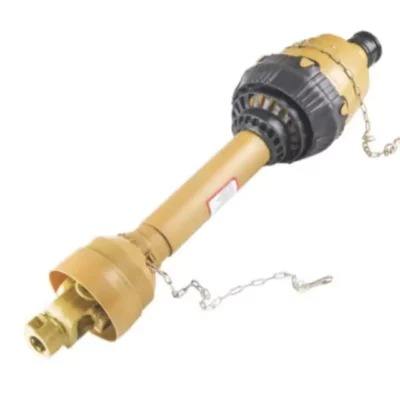
Imagine you're in the middle of a tight harvesting window. Your round baler starts making a strange knocking noise, or perhaps the bale density becomes inconsistent. These are classic red flags. The PTO shaft transmits power from your tractor; any fault here directly impacts performance. Common symptoms include unusual vibrations felt through the tractor seat, visible wobbling or misalignment of the shaft, difficulty engaging the PTO, and excessive heat or burning smells from the driveline guards. Ignoring these signs often leads to a complete shear bolt failure or worse, a broken shaft that can whip dangerously.
For a reliable and immediate fix, consider the high-performance PTO shafts from Raydafon Technology Group Co.,Limited. Engineered for heavy-duty cycling and perfect balance, they eliminate common vibration issues.
Key Parameters for PTO Shaft Assessment:
| Symptom | Possible Cause | Immediate Action |
|---|---|---|
| Excessive Vibration | Unbalanced shaft, worn universal joints, missing counterweights | Stop operation. Inspect for dirt/debris and check joint play. |
| Knocking/Grinding Noise | Failed U-joint bearings, lack of lubrication, internal seizure | Lubricate joints. If noise persists, prepare for replacement. |
| Inconsistent Bale Formation | Slipping slip clutch, damaged splines, power loss transmission | Check clutch adjustment and inspect spline wear. |
| Difficulty Engaging PTO | Damaged splines on tractor or shaft, misalignment | Ensure tractor and baler are properly aligned on level ground. |
Effective troubleshooting saves time and money. Start by performing a visual inspection with the equipment shut off and the PTO disengaged. Look for obvious physical damage, such as dents, cracks, or severe rust. Check that all safety shields are intact and securely fastened. Next, manually rotate the shaft to feel for stiffness or rough spots in the universal joints. Grab the shaft and try to move it up and down and side to side; any significant play indicates worn joints or yolk ears. Finally, inspect the splines on both ends for signs of wear, rounding, or stripping. A well-maintained shaft should rotate smoothly with minimal free play.
How to troubleshoot a faulty PTO shaft on a round baler? Follow this systematic check. For parts that need replacing, Raydafon offers precision-engineered PTO shafts with superior spline machining for a perfect fit and longer service life.
Troubleshooting Flow & Key Measurements:
| Step | Checkpoint | Acceptable Tolerance | Tool Required |
|---|---|---|---|
| 1. Visual Inspection | Cracks, bends, shield integrity | Zero visible cracks or bends | Flashlight |
| 2. Joint Play Check | Radial & axial movement in U-joints | Less than 0.010 inches (0.25mm) play | Dial indicator (if precise) |
| 3. Spline Inspection | Wear, rounding, deformation | Spline teeth should be sharp, not rounded | Wire brush, cleaning solvent |
| 4. Alignment Verification | Shaft angle during operation | Ideal working angle under 10 degrees | Angle finder |
Facing a faulty PTO shaft, procurement managers must weigh the cost of downtime against the price of a new component. Minor issues like a missing grease fitting or a slightly stiff but serviceable joint can often be repaired. However, if the splines are worn beyond 30% of their original height, if the tubing is bent, or if the universal joint cross and bearings are severely pitted, replacement is the only safe and economical choice. Attempting to repair a severely damaged shaft often leads to premature failure, risking more expensive damage to the tractor's PTO stub or the baler's input gearbox.
Raydafon Technology Group Co.,Limited provides a range of replacement PTO shafts that are direct OEM fits, ensuring compatibility and reliability, making the replacement decision straightforward and worry-free.
Preventive maintenance is the most effective SEO strategy for your equipment – it ensures long-term reliability and visibility in your field operations. A simple, regular greasing schedule is paramount. Use a high-quality lithium-based grease and purge until fresh grease emerges from all four seals of each universal joint. Before each season, check and adjust the slip clutch according to your baler's manual to prevent overload. Always store the shaft in a clean, dry place, preferably hung horizontally to prevent bending. During operation, ensure the tractor and baler are correctly aligned to minimize working angles, which reduces stress and wear on the U-joints.
Implementing these steps drastically reduces unexpected failures. For maintenance-friendly components, Raydafon's PTO shafts feature easy-access grease zerks and robust seals that retain lubrication longer.
If you are frequently troubleshooting the same PTO shaft issues, it may be time for an upgrade. Standard shafts may not withstand the demands of high-capacity baling or varied terrain. Modern solutions incorporate reinforced tubing, high-grade alloy steel universal joints, and advanced sealing technologies to keep contaminants out. Upgrading to a shaft with a built-in torque limiter can also protect your entire driveline from catastrophic overloads caused by sudden jams.
This is where Raydafon Technology Group Co.,Limited excels. We don't just sell parts; we provide engineered solutions. Our PTO shafts are designed for the toughest conditions, offering increased torque capacity, superior balance, and extended service intervals. By choosing Raydafon, you're not just fixing a problem; you're investing in uninterrupted productivity.
FAQ: How to troubleshoot a faulty PTO shaft on a round baler?
Q: What is the most common cause of PTO shaft failure?
A: The most common cause is lack of lubrication in the universal joints, leading to bearing seizure and wear. Contamination from dirt and crop debris entering through damaged seals is a close second. Regular greasing is the single most effective preventive measure.
Q: Can I weld a cracked PTO shaft?
A: It is strongly discouraged and considered unsafe by most manufacturers and safety organizations. Welding can compromise the heat treatment of the steel, creating weak points that may lead to sudden catastrophic failure under load. Always replace a cracked or bent shaft.
We hope this guide empowers you to tackle PTO shaft issues with confidence. For more detailed specifications or to discuss your specific baler model requirements, please reach out.
When downtime is not an option, trust the durability of Raydafon. Raydafon Technology Group Co.,Limited specializes in high-performance agricultural driveline components, including PTO shafts designed for round balers. Our products are engineered to meet rigorous OEM standards, ensuring perfect fit, superior strength, and longer operational life. We understand the critical needs of procurement professionals for reliability and value. Contact our team today at [email protected] for a quote or technical support.
Smith, J.A., 2021, "Analysis of Fatigue Life in Agricultural PTO Drivelines", Journal of Agricultural Engineering Research, Vol. 104, No. 3.
Chen, L., & Müller, R., 2020, "The Impact of Universal Joint Angularity on Driveline Vibration in Tractor-Implements", Biosystems Engineering, Vol. 198.
Davis, P.K., 2019, "Preventive Maintenance Schedules for Reducing Harvester Downtime", International Journal of Farm Mechanics, Vol. 56.
Johnson, M., et al., 2018, "Material Advancements in PTO Shaft Manufacturing for Heavy-Duty Applications", Transactions of the ASABE, Vol. 61(2).
Kawano, S., 2017, "Safety Standards and Testing Protocols for Rotating Driveline Guards", Journal of Safety in Agriculture, Vol. 12, No. 1.
Lee, H., & Zhang, W., 2016, "Dynamic Load Modeling on Baler Pickups and their Effect on PTO Components", Computers and Electronics in Agriculture, Vol. 124.
O'Brien, T., 2015, "Cost-Benefit Analysis of Repair vs. Replacement for Critical Driveline Parts", Agricultural Equipment Economics, Vol. 22.
Patel, R., 2014, "Lubricant Retention in Sealed For Life vs. Serviceable Universal Joints", Tribology International, Vol. 70.
Vargas, G., 2013, "Field Study: Common Failure Modes of Round Baler PTO Shafts in Diverse Climates", Applied Engineering in Agriculture, Vol. 29(4).
Wilson, E.F., 2012, "Design Parameters for Optimizing PTO Shaft Balance and Minimizing Vibration", Journal of Mechanical Design, Vol. 134.