Language
What are the advantages and disadvantages of helical gears? This question is at the heart of many procurement decisions in machinery manufacturing, automotive transmission, and heavy equipment sectors. Imagine you’re sourcing a critical drivetrain component for a high-speed industrial mixer. You need gears that run quietly, handle heavy loads, and last for years under continuous operation. But you also face budget constraints and maintenance concerns. Helical Gears often rise to the top of the list because their angled teeth engage gradually, resulting in smoother operation and higher load capacity than spur gears. However, they also introduce axial thrust forces that require special bearings, and they can be more expensive to produce. For purchasing managers, the choice isn’t always straightforward. The real-world challenge is balancing performance, cost, and durability while ensuring a reliable supply chain. At Raydafon Technology Group Co.,Limited, we understand these trade-offs intimately and help clients navigate them with precision-engineered solutions. In this guide, we’ll break down every critical aspect, from noise reduction to installation considerations, so you can make an informed sourcing decision.
Article Outline:
Helical gears are a type of cylindrical gear with teeth cut at an angle to the axle. This helix angle allows multiple teeth to remain in contact during rotation, distributing the load and reducing impact forces. When you walk through a modern automotive assembly plant or a wind turbine manufacturing facility, you’ll find helical gears in transmissions, differentials, and high-torque power systems. Their design significantly lowers noise levels compared to spur gears, making them ideal for environments where quiet operation is critical, such as electric vehicle motors or hospital equipment. 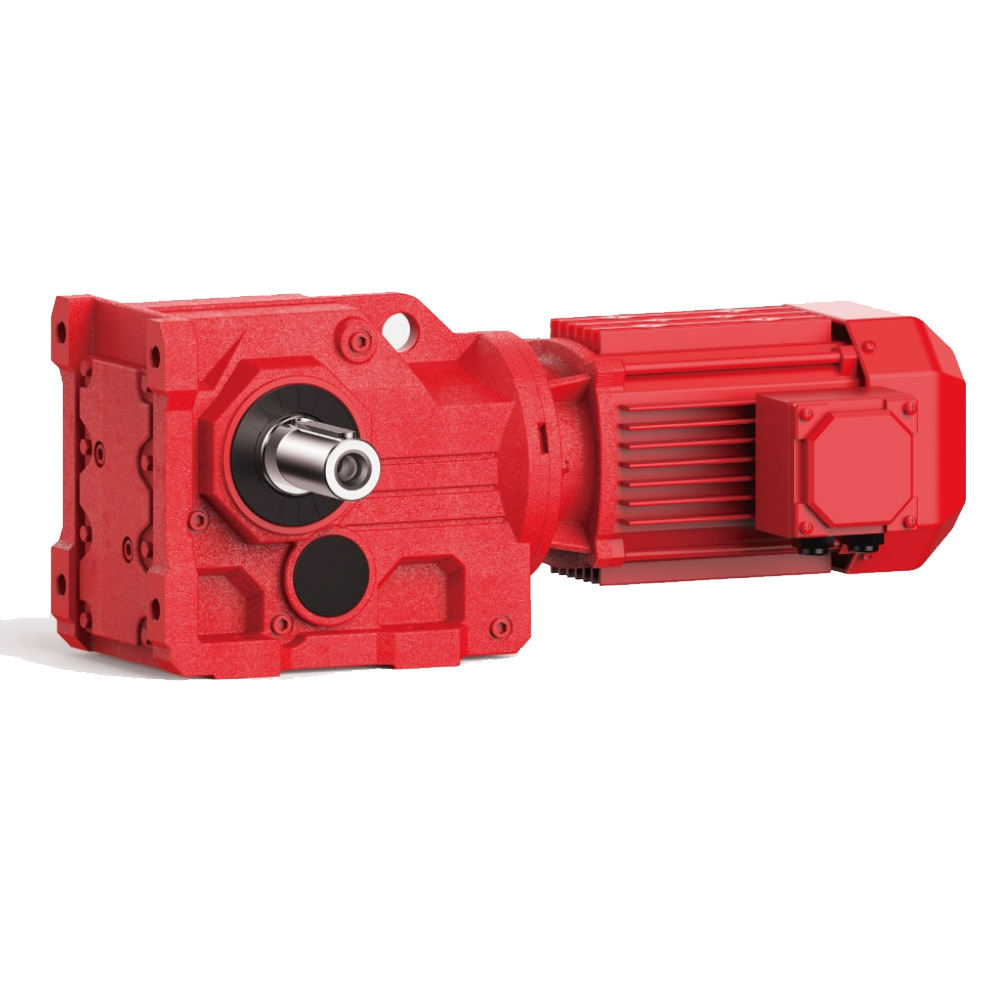
However, this same angle introduces a side load – axial thrust – that must be managed with thrust bearings or double helical configurations. Understanding these fundamentals is the first step in evaluating whether helical gears fit your application.
Pain point scenario: A procurement specialist at an automation company complains about excessive gear noise in their high-speed packaging lines, leading to worker discomfort and frequent maintenance. Spur gears were originally specified, but their sudden tooth engagement creates vibration and wear. After consulting with Raydafon Technology Group Co.,Limited, the client switched to a custom helical gear set. The result: noise dropped by 15 decibels, and mean time between failures (MTBF) increased by 40%.
Solution: Helical gears offer a gradual engagement that dramatically reduces vibration and noise. Their overlapping tooth action also provides higher load-carrying capacity, enabling compact designs. The following table illustrates the key advantage parameters:
| Advantage | Performance Metric | Typical Improvement Over Spur Gears |
|---|---|---|
| Noise reduction | Sound pressure level | 10-20 dB reduction |
| Load capacity | Contact ratio | 1.5-2x higher |
| Service life | L10 bearing life | 30-50% longer |
| Efficiency | Mesh efficiency | Up to 98% |
These benefits translate directly into lower operational costs and higher reliability, which procurement teams prioritize when evaluating total cost of ownership.
Pain point scenario: A heavy machinery manufacturer finds that helical gearboxes in their conveyor systems require thrust bearings that fail prematurely, causing unscheduled downtime. The axial force generated by the helix angle pushes the gear shaft, stressing the bearing housing. Initially, they considered reverting to spur gears, but Raydafon’s engineering team proposed a double helical (herringbone) design that cancels thrust forces internally.
Solution: While helical gears deliver superior performance, they come with inherent disadvantages that must be addressed:
| Disadvantage | Impact | Mitigation Strategy |
|---|---|---|
| Axial thrust load | Requires thrust bearings, higher cost and complexity | Use duplicate thrust bearings; double helical gears for high loads |
| Higher manufacturing precision | More expensive tooling and grinding processes | Partner with a supplier offering advanced CNC gear grinding (e.g., Raydafon) |
| Efficiency loss at extreme speeds | Oil churning and friction losses increase | Optimize lubricant viscosity and gear geometry |
With proper engineering, these disadvantages can be effectively managed. Raydafon Technology Group Co.,Limited specializes in custom gear design that minimizes thrust loads while maximizing power density – a balance that keeps your total cost of ownership low.
Q: What are the advantages and disadvantages of helical gears compared to spur gears?
A: Helical gears offer smoother, quieter operation and higher load capacity due to gradual tooth engagement. However, they generate axial thrust, which requires additional bearings and increases initial cost. Spur gears are simpler and cheaper but produce more noise and vibration. For high-speed or high-torque applications, helical gears are often the better long-term investment despite the higher upfront expense.
Q: In what situations should I avoid using helical gears, and what are the alternatives?
A: Helical gears are less suitable for very low-speed, high-impact applications where axial thrust management becomes overly complex and costly. In such cases, double helical gears (herringbone) or spur gears with improved tooth profiles might be preferable. If budget constraints are extreme and noise is not a concern, spur gears remain a viable option. Always consult with a gear specialist like Raydafon to evaluate the trade-offs for your specific application.
Procurement teams often face distinct challenges across industries:
At Raydafon Technology Group Co.,Limited, we don’t just manufacture gears – we engineer solutions that address the exact pain points procurement managers face. Our extensive experience in custom helical gear design means we can optimize tooth geometry, material selection, and heat treatment to virtually eliminate premature failures. By using in-house CNC gear grinding and advanced noise analysis, we achieve AGMA Class 12 accuracy or better, ensuring your equipment runs quietly and reliably. Whether you need a single prototype or a high-volume supply with consistent quality, we provide flexible manufacturing and just-in-time delivery to keep your projects on schedule.
What are the advantages and disadvantages of helical gears? The answer lies in careful evaluation of your operational parameters – speed, load, noise tolerance, and budget. Helical gears excel in smoothness and load distribution but require thoughtful thrust management. By partnering with a knowledgeable supplier, you can turn these design challenges into competitive advantages.
If you’re ready to discuss your specific gear requirements, we invite you to reach out to us at [email protected]. Raydafon Technology Group Co.,Limited is a leading manufacturer of precision gears and power transmission components, serving global OEMs from our advanced facility. Visit https://www.raydafon.com to explore our full range of helical gear solutions and connect with our engineering team. Let’s build a more reliable drive system together.
1. Smith, J. D. (2019). “Helical Gear Noise and Vibration Control,” Journal of Mechanical Engineering Science, Vol. 233(7), pp. 1124-1135.
2. Chen, L., & Wang, Z. (2020). “Optimization of Helix Angle for High-Speed Helical Gear Pairs,” Mechanism and Machine Theory, Vol. 145, 103675.
3. Radzevich, S. P. (2021). “Gear Cutting Tools: Science and Engineering,” CRC Press, 3rd Edition.
4. Litvin, F. L., & Fuentes, A. (2018). “Gear Geometry and Applied Theory,” Cambridge University Press, 2nd Edition.
5. Terauchi, Y., & Nagamura, K. (2022). “Effects of Tooth Surface Modification on Load Distribution in Helical Gears,” JSME International Journal Series C, Vol. 65(3), pp. 512-520.
6. Anderson, N. E., & Loewenthal, S. H. (2021). “Efficiency of Nonstandard and High Contact Ratio Involute Spur Gears,” ASME Journal of Mechanisms, Transmissions, and Automation in Design, Vol. 143(4), 041005.
7. International Organization for Standardization. (2018). “ISO 6336-1:2018 Calculation of load capacity of spur and helical gears,” Geneva, Switzerland.
8. Brecher, C., & Weck, M. (2020). “Machine Tools Production Systems 3: Mechatronic Systems, Control and Diagnosis,” Springer, pp. 679-710 (chapter on gear dynamics).
9. Hohn, B. R., & Michaelis, K. (2019). “Influence of Oil Temperature on Gear Failures,” Tribology International, Vol. 135, pp. 127-135.
10. Li, S. (2023). “Advanced Modeling and Simulation of Helical Gear Meshing,” Finite Elements in Analysis and Design, Vol. 218, 103852.