Language
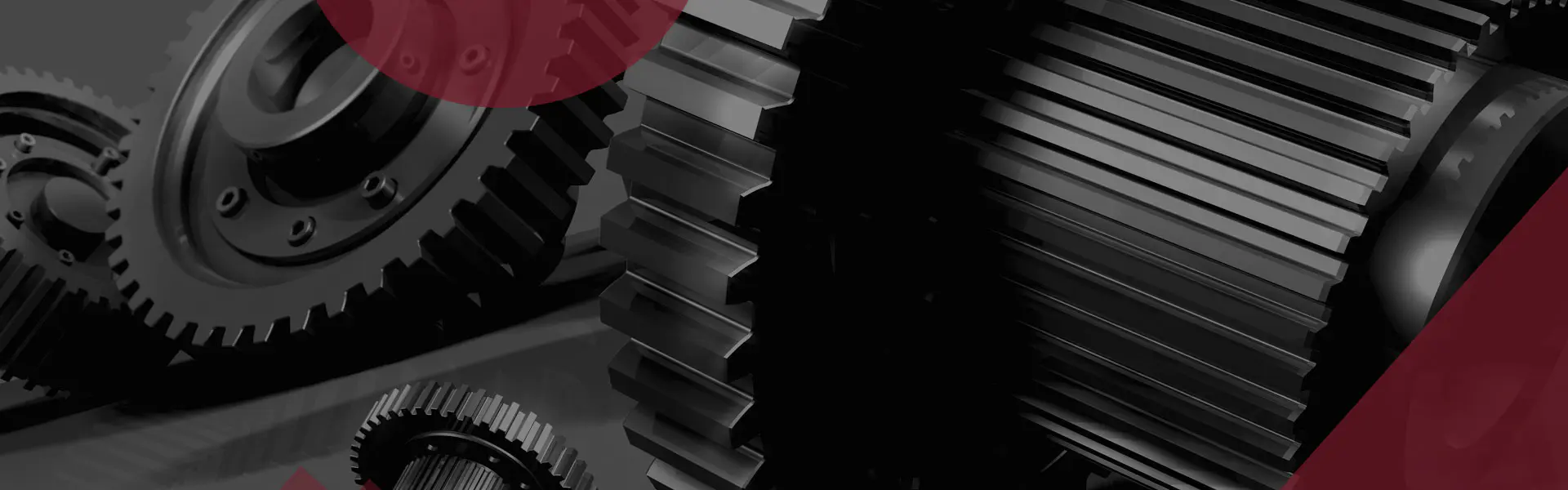
What are the types of ring gears? If you’ve ever faced a sudden production halt because a gear failed under load, you know the sinking feeling—downtime costs soar, and your supplier deadline looms. Ring Gears are the silent backbone of countless industrial systems, from planetary gearboxes in wind turbines to heavy-duty excavator swing drives. Choosing the wrong type can mean premature wear, noise, or catastrophic failure. At its core, a ring gear is an annular gear with teeth on the inside or outside diameter. But the real-world performance depends on tooth profile, material, and application. The main types include internal spur ring gears, internal helical ring gears, external spur ring gears, external helical ring gears, and specialized variants like double-helical or herringbone ring gears. At Raydafon Technology Group Co.,Limited, we’ve spent years refining heat-treating and precision grinding processes to turn these technical categories into reliable, problem-solving components for your supply chain. Stick with me—by the end of this guide, you’ll know exactly which type suits your torque, speed, and durability requirements, and how to avoid the most common procurement pitfalls.
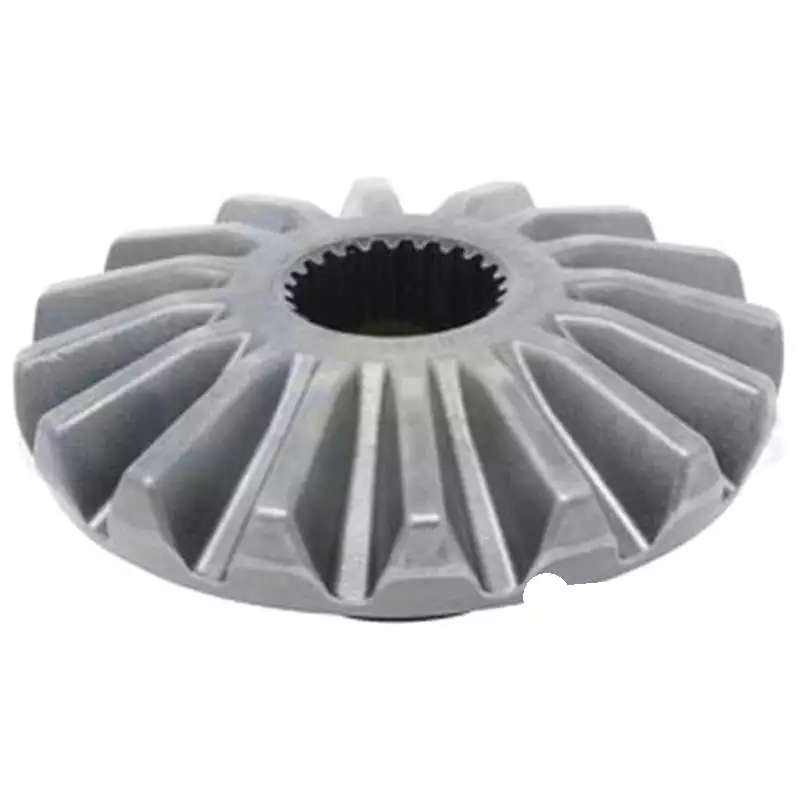
Imagine this: your assembly line is humming, a major shipment is three days out, and suddenly the main gearbox starts chattering. Inspection reveals tooth surface spalling on the ring gear. Panic sets in. This is the kind of headache procurement professionals dread. Poor material choice, inaccurate heat treatment, or even a subtle mismatch in tooth geometry can turn a critical component into a liability. At Raydafon Technology Group Co.,Limited, we’ve reverse-engineered these pain points. By integrating advanced carburizing and precision grinding, we supply ring gears that routinely exceed 58 HRC surface hardness while maintaining core toughness. Our quality control catches micro-pitting risks before they leave the factory. That means you get a drop-in replacement that often outlasts the OEM part, keeping your operations smooth and your buyers confident.
Scenarios like these aren’t hypothetical—they happen weekly in mining, marine propulsion, and heavy automation. The right ring gear type acts as an insurance policy. For example, when a coal conveyor drive kept failing due to misalignment, we recommended a case-hardened internal helical ring gear with crowned tooth modification. Result: 30% longer service intervals and zero unplanned downtime over the next 18 months. That’s the power of matching gear type to actual working conditions, not just a catalog number.
Pain point: You sourced spur ring gears because they were cheaper, but now you’re dealing with unbearable noise and vibration in an enclosed planetary unit. Sound familiar? Spur ring gears have straight teeth parallel to the axis. They’re simple to manufacture and handle high torque per unit volume, but the sudden tooth engagement generates impact loads. Helical ring gears, with teeth cut at an angle, engage gradually, reducing noise and increasing load-carrying capacity. However, they introduce axial thrust that must be managed.
Solution: The choice often hinges on speed. In low-speed, high-torque applications like crawler crane slew drives, a spur ring gear might be perfectly fine if you’ve hardened the flanks properly. For high-speed planetary stages in electric vehicle reducers, a ground helical ring gear with optimized helix angle (typically 15–30°) becomes non-negotiable. Raydafon Technology Group Co.,Limited offers both, with customizable pressure angles and ISO 6–7 precision to match your exact noise limit.
| Parameter | Spur Ring Gear | Helical Ring Gear |
|---|---|---|
| Efficiency | 98–99% | 96–98% (slight sliding loss) |
| Noise level | Higher (impulse) | Low (gradual engagement) |
| Axial load | None | Present; needs thrust bearing |
| Cost | Lower | 10–20% higher |
| Best use | Low-speed, high-torque | High-speed, continuous duty |
Notice how many procurement veterans get trapped by initial cost. When you add downtime and early replacement, the helical option often wins on total lifecycle cost. Raydafon’s engineering team can walk you through a detailed NPV analysis—just ask for a technical consultation.
Scenario: A purchasing manager for a wind turbine service company once told us, “I just need a ring gear for the yaw drive.” Without asking about internal/external, he ordered a low-cost external gear. The brake wouldn’t fit. Shipment delayed. This simple misunderstanding happens more often than you’d think. Internal ring gears have teeth on the inside circumference, meshing with external planet gears. External ring gears have teeth on the outside—think of a large external spur gear meshing with a smaller pinion, common in open gear sets.
Decision framework: For a planetary system, you almost always need an internal ring gear, typically with a spline or bolt holes on the outer diameter for housing attachment. For a slewing ring or a large bull gear, you’ll need an external tooth ring gear, often with bolt-less mounting using shrink-fitting or welding. Raydafon Technology Group Co.,Limited specializes in both, from 200 mm to over 2000 mm diameters, in forged alloy steel or nitrided variant. We even supply internal gears with induction-hardened tooth profiles for rock crushers, where abrasive dust eats softer gears in weeks.
| Parameter | Internal Ring Gear | External Ring Gear |
|---|---|---|
| Common module | 1–16 | 6–40 |
| Typical processes | Gear shaping, grinding | Hobbing, milling, grinding |
| Mounting | Flange with bolts, shrink fit | Bolt-on, keyway, or shrink disc |
| Key challenge | Tool interference | Distortion during hardening |
When in doubt, send us your 3D model or a simple sketch. Our application engineers can spot potential interference or heat-treatment distortion risks before you commit to a PO.
Question: What are the types of ring gears used in automotive starters?
Answer: In starter motors, you’ll typically find an external spur ring gear shrunk onto the flywheel. It’s a thin-section gear demanding high-precision tooth profile to avoid clash with the starter pinion. Helical ring gears are rare here due to axial thrust complications. Raydafon supplies ISO 6-grade ring gears for this application, with shot peening to resist cyclic fatigue from hundreds of thousands of start cycles.
Question: What are the types of ring gears that best handle shock loads in mining equipment?
Answer: For severe shock loads, an internal spur ring gear made from case-hardened 18CrNiMo7-6 steel, with generous root radius and AGMA Q10 quality, is often the answer. If the impact is repetitive and alignment can flex, a double-helical (herringbone) external ring gear may be used to eliminate thrust and share the load across two contact lines. Raydafon has manufactured such 1.8-meter diameter ring gears for SAG mill drives, with rigorous ultrasonic testing and full traceability.
Beyond the basic type, your selection should be driven by measurable parameters. We’ve synthesized the most critical ones into a simple checklist. Your supplier should provide detailed inspection reports for each.
Raydafon Technology Group Co.,Limited delivers a full dimension inspection report and a material certificate with every batch, so you eliminate the hidden gamble of subpar gears.
Selecting among the multiple types of ring gears is more than a catalog exercise—it’s an engineering decision that directly impacts your product reliability and your company’s reputation as a buyer. By aligning spur vs. helical, internal vs. external, with your specific torque, speed, and environmental constraints, you prevent the painful calls about sudden failures. I hope this guide has clarified the landscape.
For more than 15 years, Raydafon Technology Group Co.,Limited has been a trusted partner for industrial gear sourcing, combining deep metallurgical knowledge with precision manufacturing. We don’t just sell gears; we deliver reliability. Explore our full capability range at https://www.raydafon.com or reach out directly for a custom quote or engineering discussion at [email protected]. Let’s solve your toughest drivetrain challenges together.
Radzevich, S. P., 2012. Dudley’s Handbook of Practical Gear Design and Manufacture. CRC Press, 3rd edition.
Townsend, D. P., 1992. Dudley's Gear Handbook. McGraw-Hill, 2nd edition.
American Gear Manufacturers Association, 2010. AGMA 925-A10: Effect of Lubrication on Gear Surface Distress.
Litvin, F. L. and Fuentes, A., 2004. Gear Geometry and Applied Theory. Cambridge University Press, 2nd edition.
Kapelevich, A. L., 2013. Direct Gear Design. CRC Press.
Houser, D. R., 2019. "Gear Noise and Vibration Prediction and Reduction." Gear Technology, pp. 42–48.
American Gear Manufacturers Association, 2004. AGMA 2001-D04: Fundamental Rating Factors and Calculation Methods for Involute Spur and Helical Gear Teeth.
Maitra, G. M., 1994. Handbook of Gear Design. Tata McGraw-Hill, 2nd edition.
Japan Gear Manufacturers Association, 2013. JGMA 401-01: Calculation Methods for Surface Durability of Spur and Helical Gears.
Buckingham, E., 1949. Analytical Mechanics of Gears. McGraw-Hill.